Plan your trip · Uncovered
Tenerife Uncovered
The island beyond the resorts: misty laurel forests, mountain villages, Sunday markets and the small, real things most visitors fly home without ever tasting.
It’s easy to spend a week in the sunny south of Tenerife and think you’ve seen the island — but you haven’t, not really. The Tenerife I love is up north and inland: green hills, wine-country taverns with no signs, weekend markets full of cheese and honey, and food traditions that go back centuries. Here’s how to find the authentic side, the one worth slowing down for.
Right now on the island
“What’s the weather in Tenerife?” has three answers at once — because a volcano splits the island in two. Live, updates when you load the page:
Local truth: if the north is grey and drizzly, the south is almost certainly sunny — and vice versa. Locals don’t check “the weather”, they check which side.
The villages worth the drive
Rent a car and head north and inland — this is where the real island lives. A few that are worth your time:
La Laguna
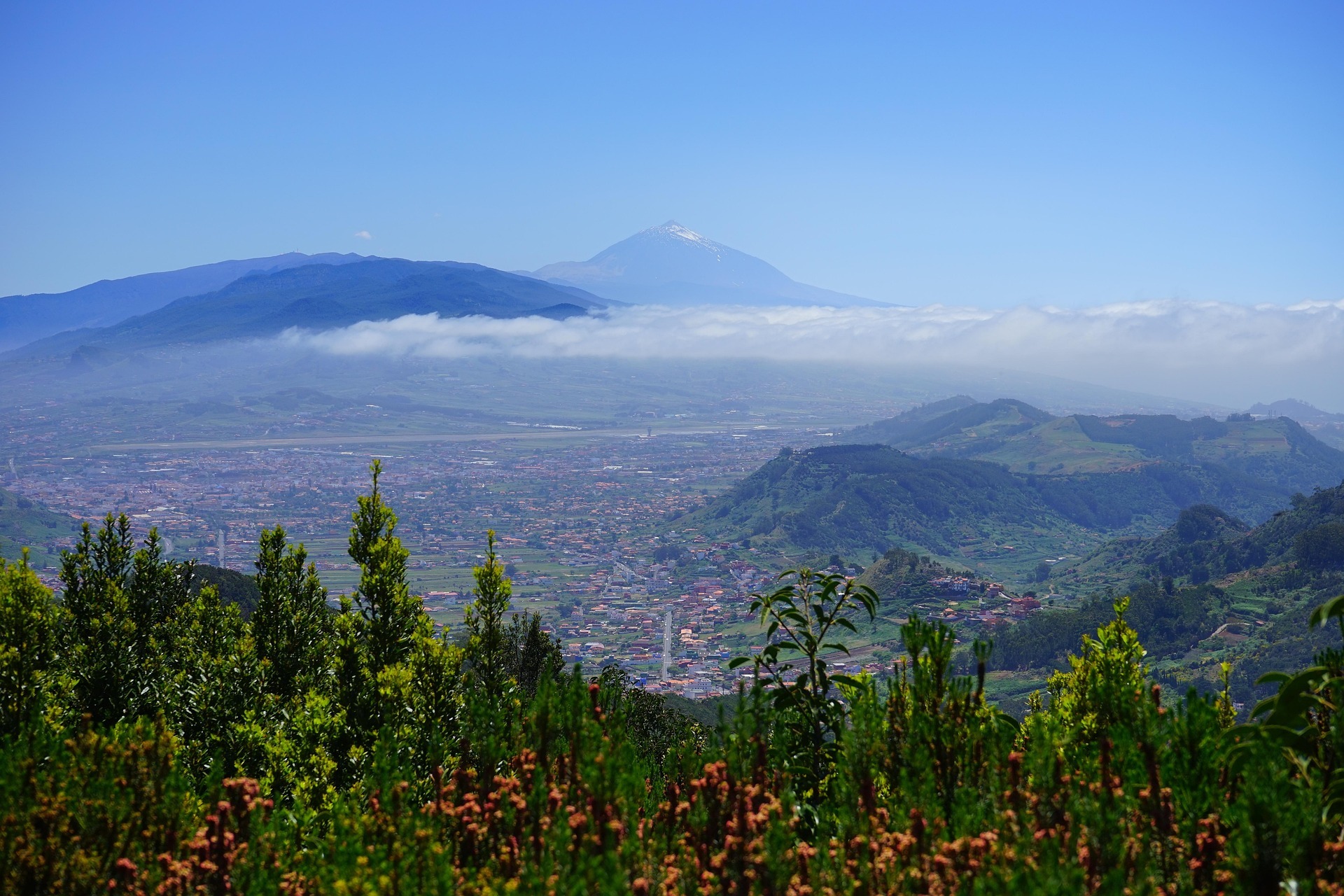
The island’s former capital and a UNESCO World Heritage old town — pastel mansions, cobbled streets and a buzzing student-and-tapas energy after dark. Come late afternoon when the light turns gold and the day-trippers leave. It’s also the gateway to the wild Anaga forests just behind it.

La Orotava
Just above Puerto de la Cruz, La Orotava has the most beautiful historic streets and carved wooden balconies on the island, in a lush green valley. For Corpus Christi (early summer) its squares are carpeted with intricate pictures made of coloured volcanic sand and flower petals — a tradition worth planning a trip around.
Masca
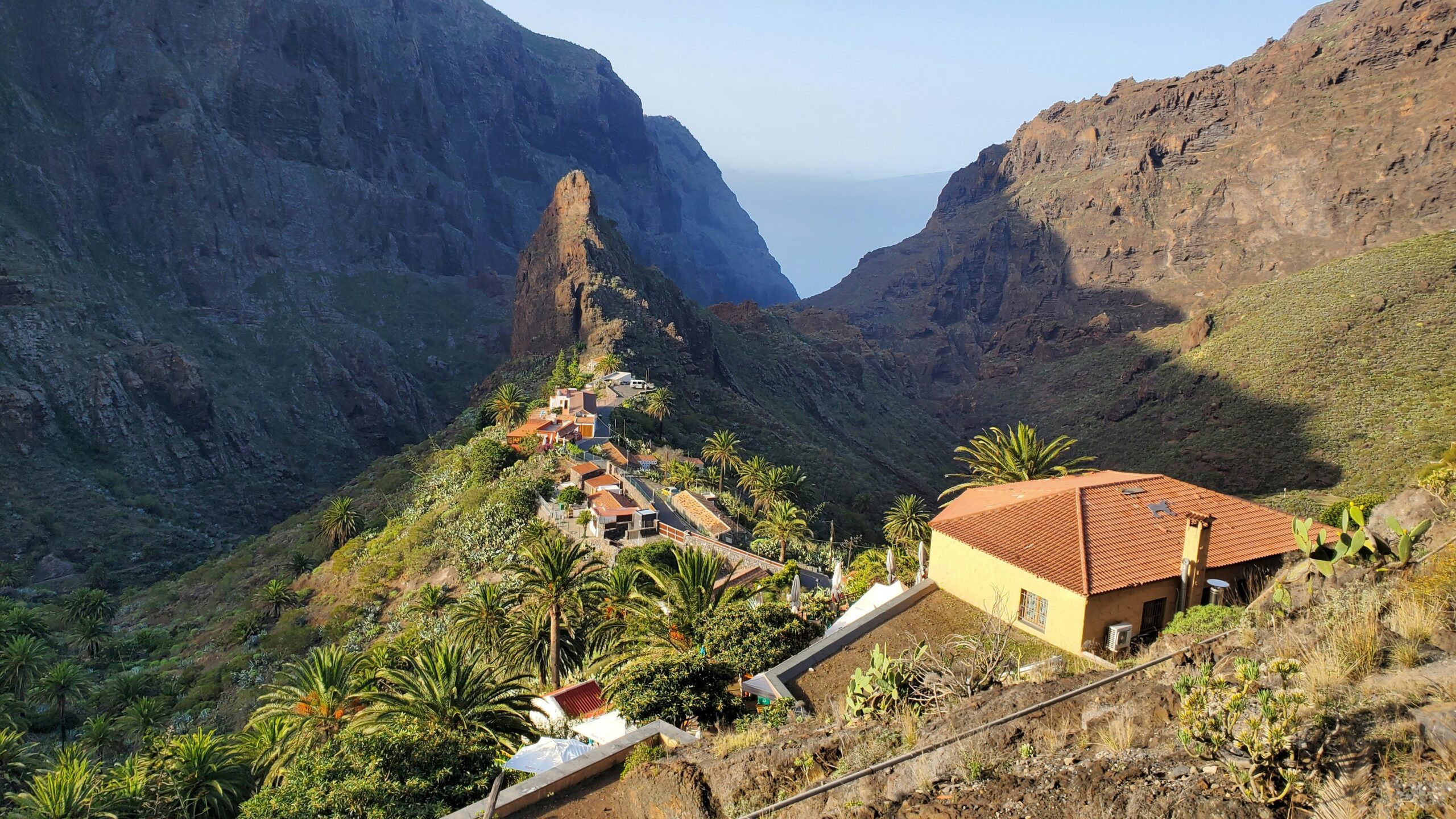
A tiny hamlet of barely 100 people clinging to a ridge deep in the Teno massif, often called the island’s most dramatic village. The views over the gorge are jaw-dropping and the village is free to wander. (The famous gorge hike below needs a paid permit and a boat back — but you don’t need to hike to enjoy Masca itself.)
Icod de los Vinos
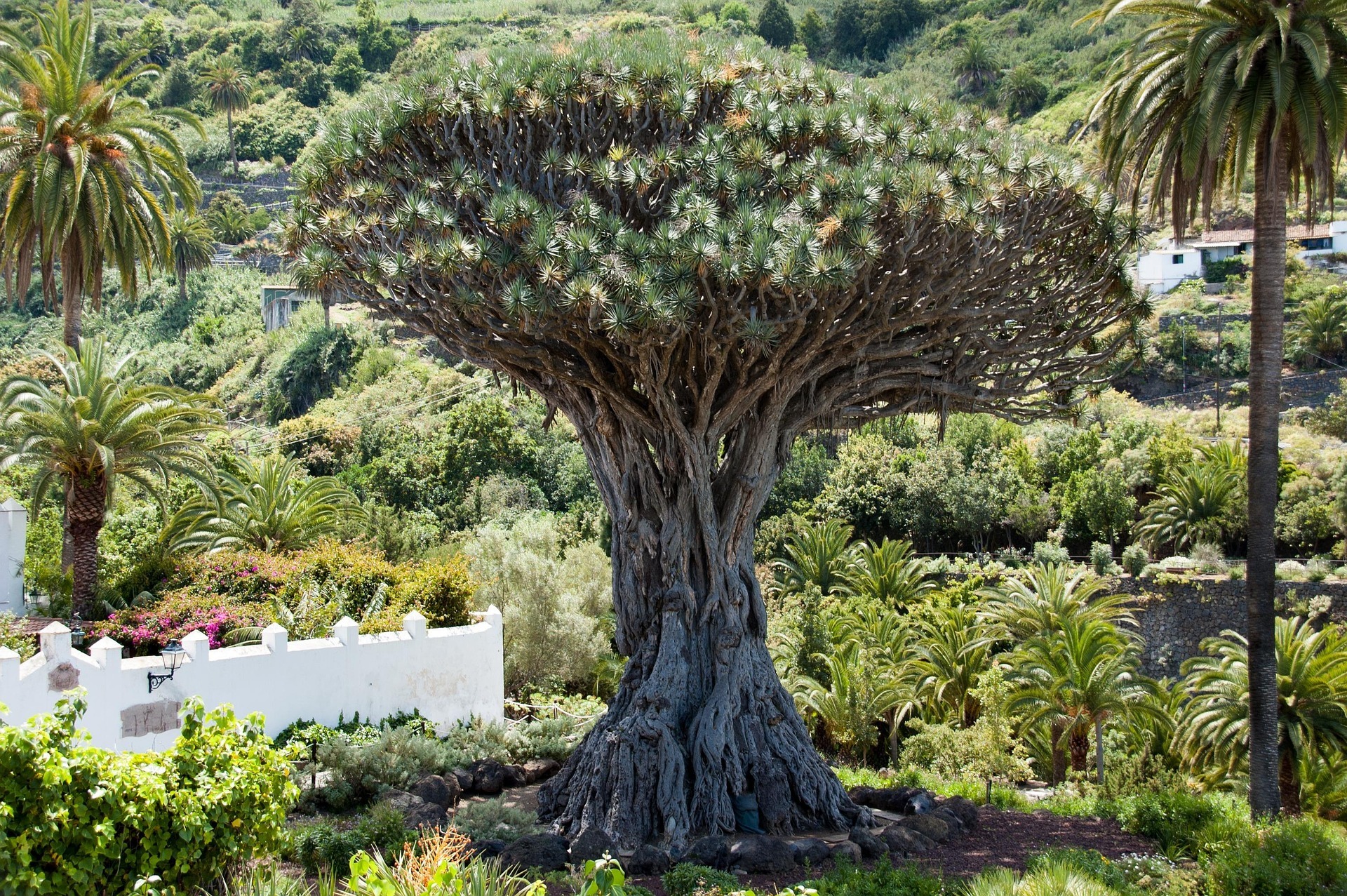
Home to the Drago Milenario, a vast dragon tree thought to be among the oldest in the world, and to some of the island’s best Malvasía wine. A free, twenty-minute stop that quietly tells you how old and strange this island really is — pair it with a tasting in town.
🏡 Tempted to stay the night up here?
If the green north and the mountains get under your skin — and they will — don’t rush back to the coast. The villages and the hills have lovely rural hotels, casas rurales, B&Bs and apartments, often stone-built with mountain or forest views and total silence. Waking up to misty peaks and a Sunday market is a completely different side of Tenerife.
✨ Or sleep under the stars — literally
Here’s the one I’d save for a special occasion: up near Teide the night sky is one of the clearest on Earth — a designated Starlight Reserve. There are mountain stays and stargazing experiences built around it, often with telescopes and total silence. With skies this dark, the Milky Way overhead is the kind of thing you remember for years.
What to taste — the real local flavours
Don’t make the classic tourist mistake of eating only at the resort. These are the flavours locals are proud of:
🍷 Pre-phylloxera wines
Tenerife is one of the very few places in Europe whose vines were never hit by the phylloxera plague that wiped out the continent’s vineyards. Five separate wine regions, some of the highest vineyards in Europe, in volcanic soil. Look for crisp Malvasía whites and mineral Listán Negro reds — wines you can barely find anywhere else.
🥔 Papas arrugadas con mojo
“Wrinkly potatoes” boiled in very salty water and served with mojo — red (spicy) or green (coriander/garlic). The most iconic Canarian dish, simple and addictive.
🐰 Conejo en salmorejo
Rabbit marinated in wine, garlic, herbs and spices, then slow-cooked — the classic guachinche main, best with a glass of local red.
🧀 Queso asado con mojo
Grilled local goat’s cheese served warm with mojo — a simple starter you’ll see in every honest tavern.
🌾 Gofio & escaldón
Toasted milled cereal, the cornerstone of Canarian food for centuries. Try escaldón de gofio — a thick, hearty porridge made with meat broth.
🍯 Honey & almonds
Mountain honey and almond sweets from the highlands, plus sweet Malvasía dulce dessert wine — small producers, big quality, found at village markets.
🍴 Taste it the easy way
Want to taste all this without hunting it down yourself? There are lovely small-group experiences that do the work for you — wine tastings, food walks and guachinche-style local food with a guide:
The best local markets
Markets are where you meet the real island — and the best souvenirs you can bring home are edible. The standouts (all verified for 2026):
Mercadillo de Tegueste
Sat & Sun · 8:00–14:0033 stalls of farmers selling direct — fruit, cheese, dairy, meat and Canarian crafts including lacework. Its own car park and a café with a terrace. One of the most genuine on the island.
Mercadillo de Tacoronte
Sat & Sun · 8:00–14:00Deep in wine country. Fruit and veg, artisan cheeses, honey, gofio, homemade pastries — and the local Tacoronte-Acentejo wines from tiny family vineyards. Running since 1980.
Mercado de La Laguna
Mon–Sat · ~7:00–14:00A permanent indoor market in the UNESCO old town (Plaza del Cristo), 100+ stalls, worth it for the flower displays alone. A farmers’ market sets up alongside on Tue, Thu & Sat.
Mercado Ntra. Sra. de África — Santa Cruz
Mon–Sat · ~6:00–14:00The capital’s grand covered market — fish, produce, flowers and little tapas stalls. The city’s pantry, and a great rainy-day wander.
🚐 Don’t have a car?
No problem — guided tours run to the markets, wine country and northern villages, with pickup and a local guide who helps you taste and shop like a local.
🛍️ Guided food & village tours →Getting around like a local
⛴️ Island-hop by ferry
From Los Cristianos you can be on another island by lunch. La Gomera (San Sebastián) is ~50 min, up to 8 crossings a day, roughly €43–45 each way (Fred. Olsen & Naviera Armas). Same port also serves La Palma and El Hierro. Check live times →
🚌 The guagua (local bus)
Nobody local says “bus” — it’s the guagua, run by TITSA, reaching far more of the island than visitors expect. Get the rechargeable tarjeta / bono card: cheaper than cash, just tap on and off. TITSA routes →
Resident perk: if you live in the Canaries, ferries and guaguas give big resident discounts (around 75% on standard ferry fares), and under-3s travel free. Carry proof of residency.
Things few visitors know
Market days, ferry times, permits, fiesta dates and prices change — always check official sources before a special trip. This guide is built from local knowledge and research; I only point you to things genuinely worth your time.