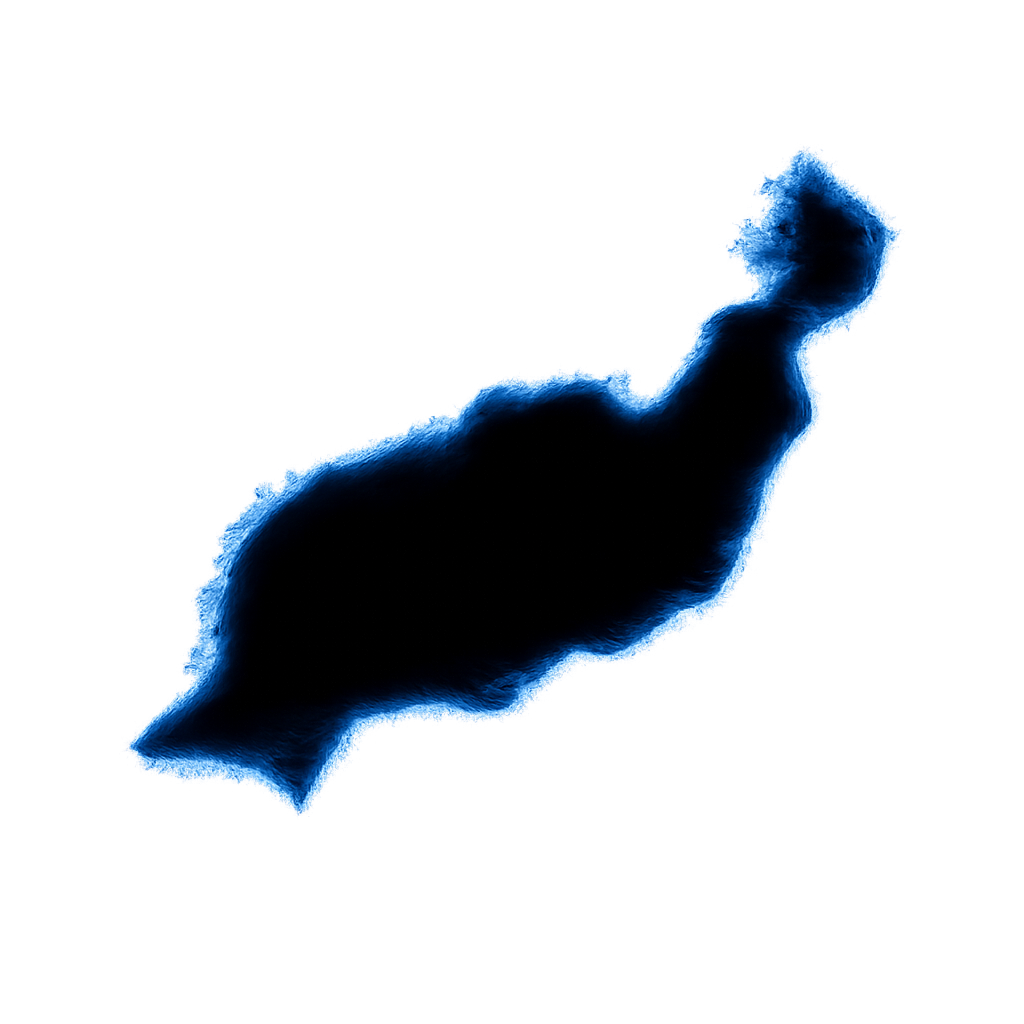
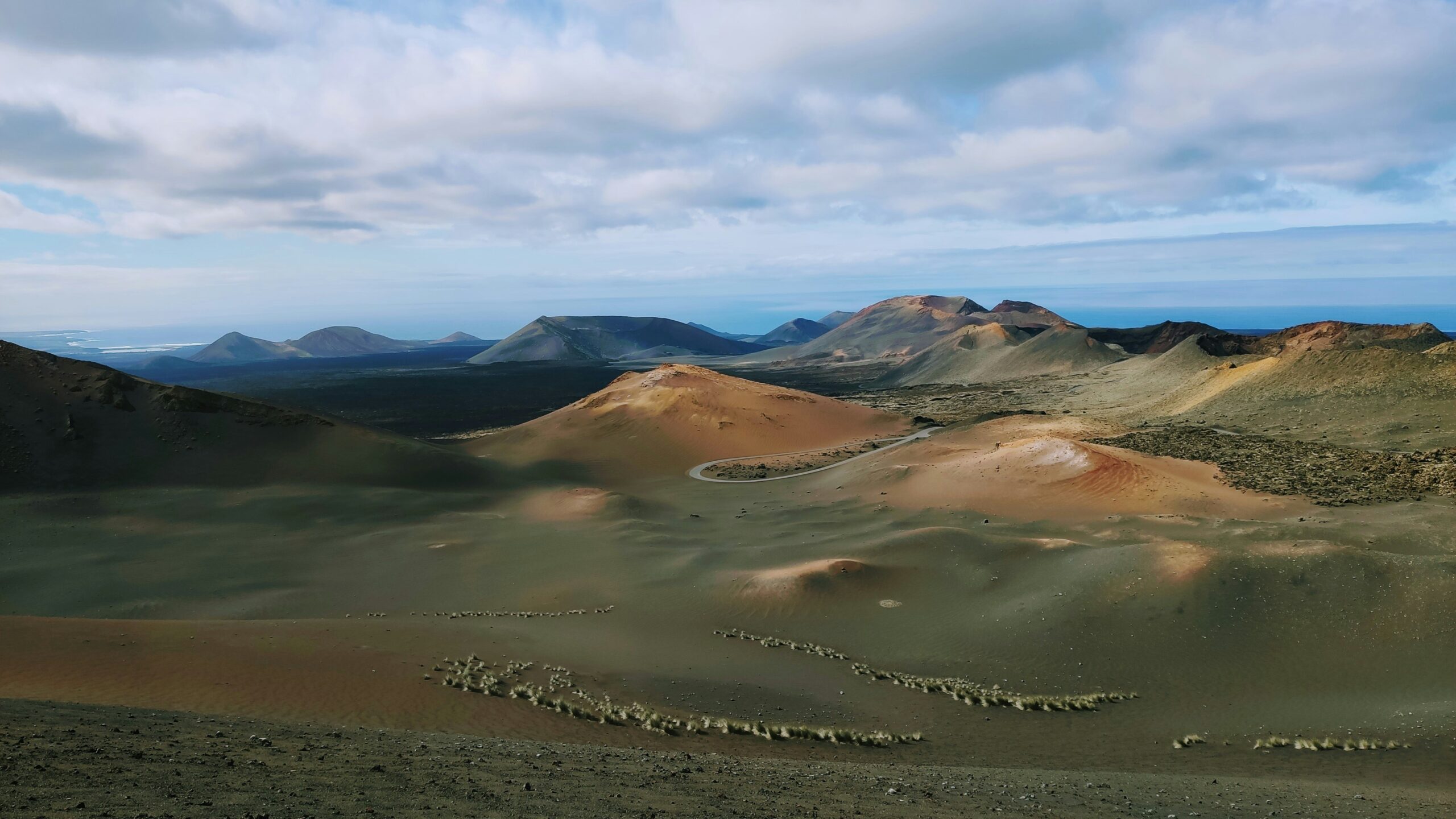
If you come to Lanzarote and only see the beaches, you’ve missed the point. This whole island is a volcano that cooled down and became one of the most surreal landscapes in Europe. The black fields, the green lagoons, the wine, the white villages, the very colour of the sand — none of it makes sense until you realise it all came from fire.
So before the to-do lists and the bookings, let me tell you what Lanzarote actually is — because the moment it clicks, the island stops being a holiday and starts being something you’ll never quite forget.
The eruption that built an island
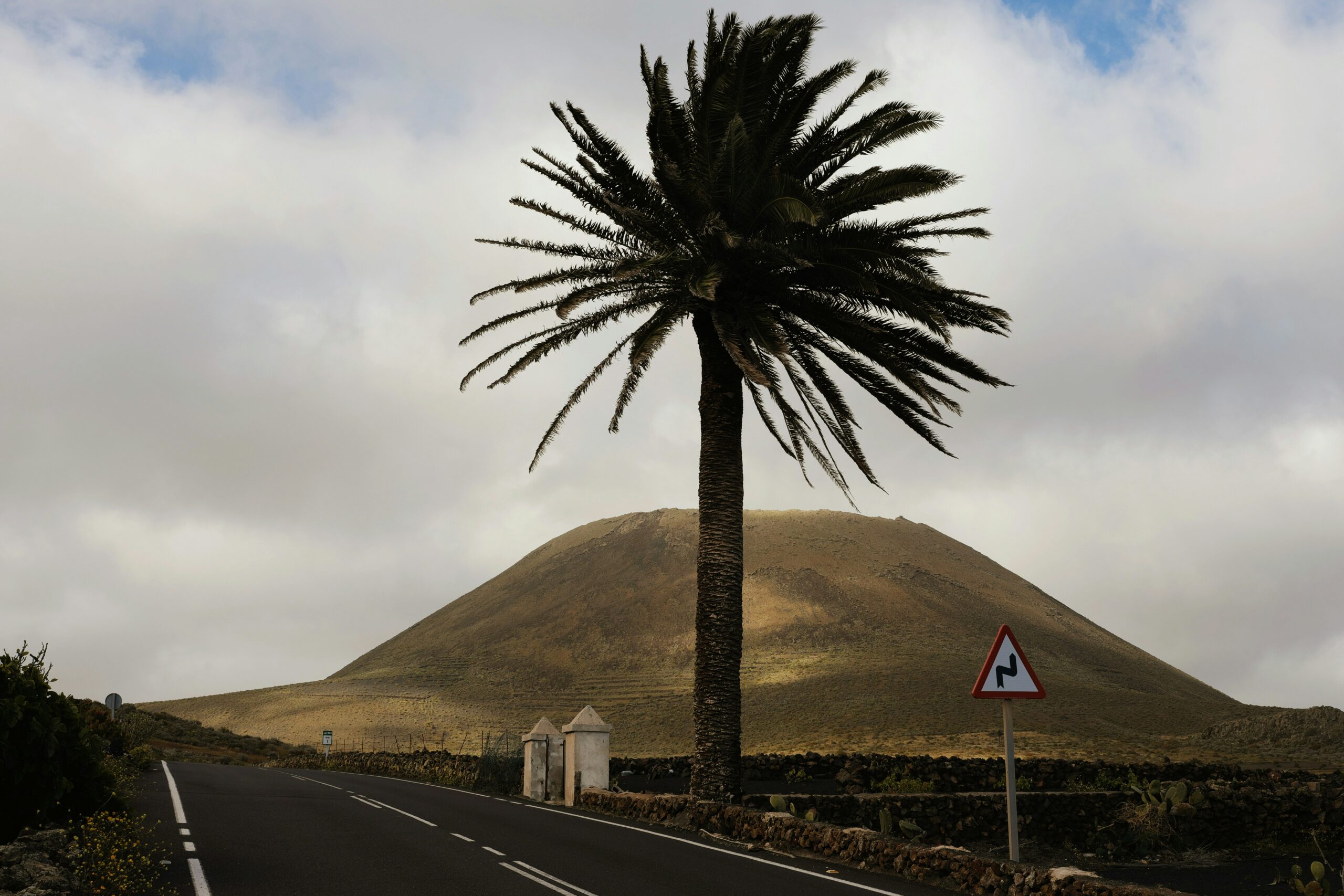
Between 1730 and 1736, Lanzarote lived through one of the longest volcanic events in recorded European history. For six years the earth split open, and rivers of lava and ash buried huge swathes of the island — swallowing whole villages and the most fertile farmland.
It should have been the end. Instead it created the otherworldly scenery that defines the island today: the Mars-red craters of Timanfaya, the frozen seas of lava, the malpaís badlands. The islanders didn’t flee — they learned to live on the lava. That stubborn, ingenious relationship with the volcano is the whole story of Lanzarote.
How a desert learned to grow
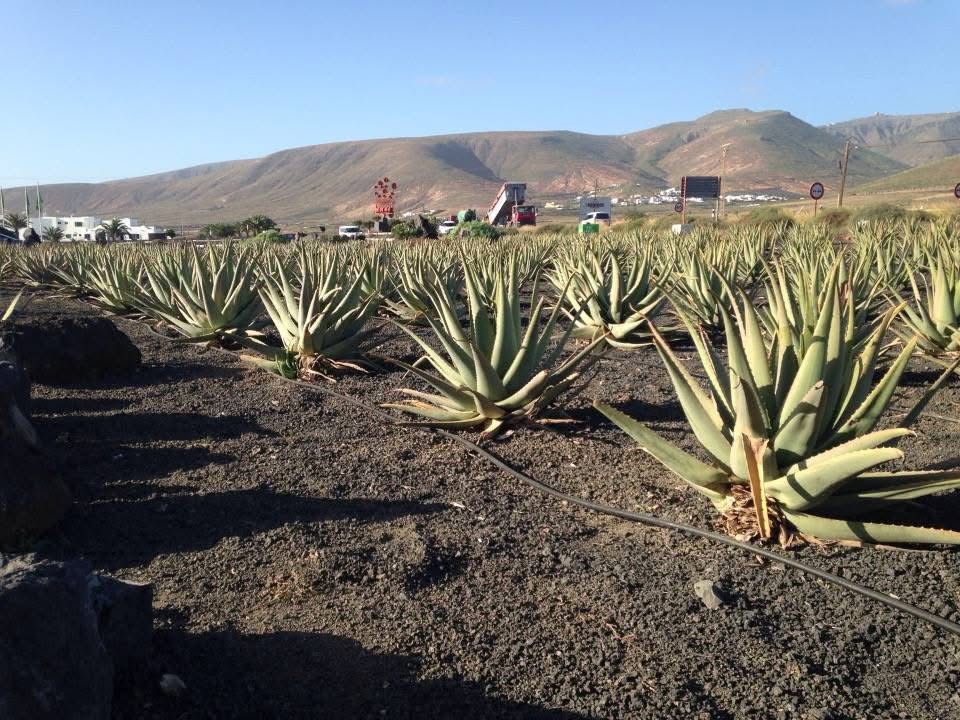
Here’s the genius of this island: there’s almost no rain, yet things grow beautifully — because the islanders discovered that the black volcanic grit, the picón, traps the night-time dew and feeds it slowly to the roots. It’s farming without water, and it’s everywhere once you spot it.
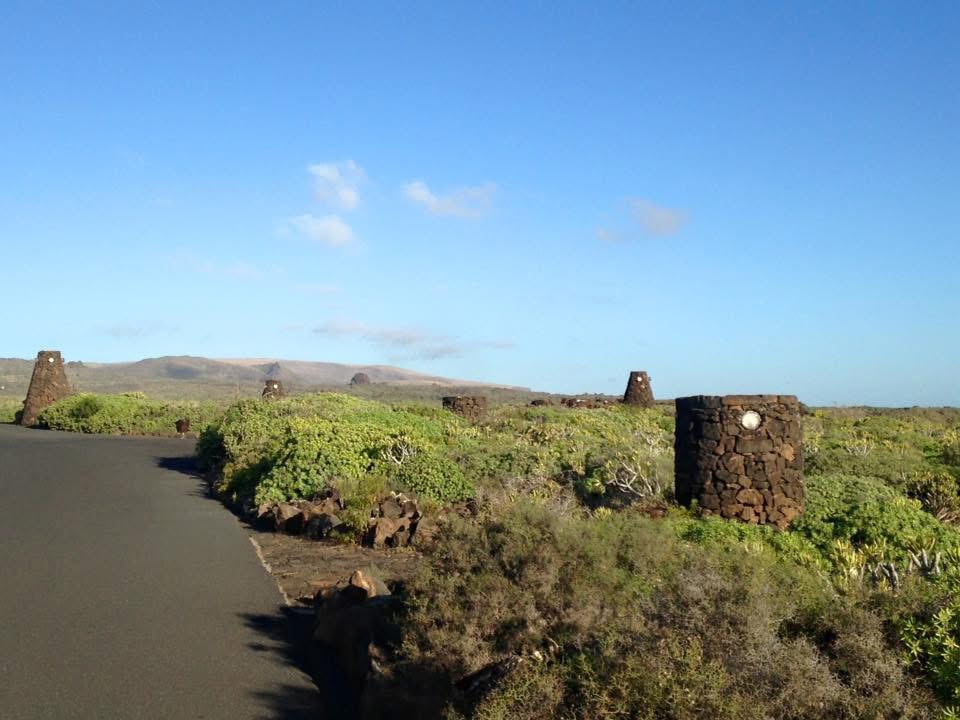
You’ll see it in fields of aloe vera thriving in the ash, and in the little cylindrical drystone shelters called goros and tinas dotted across the lava — built to protect crops and animals from the relentless trade winds. Every one of them is a small act of defiance against a hostile land. The whole island is, really.
Wine born from catastrophe
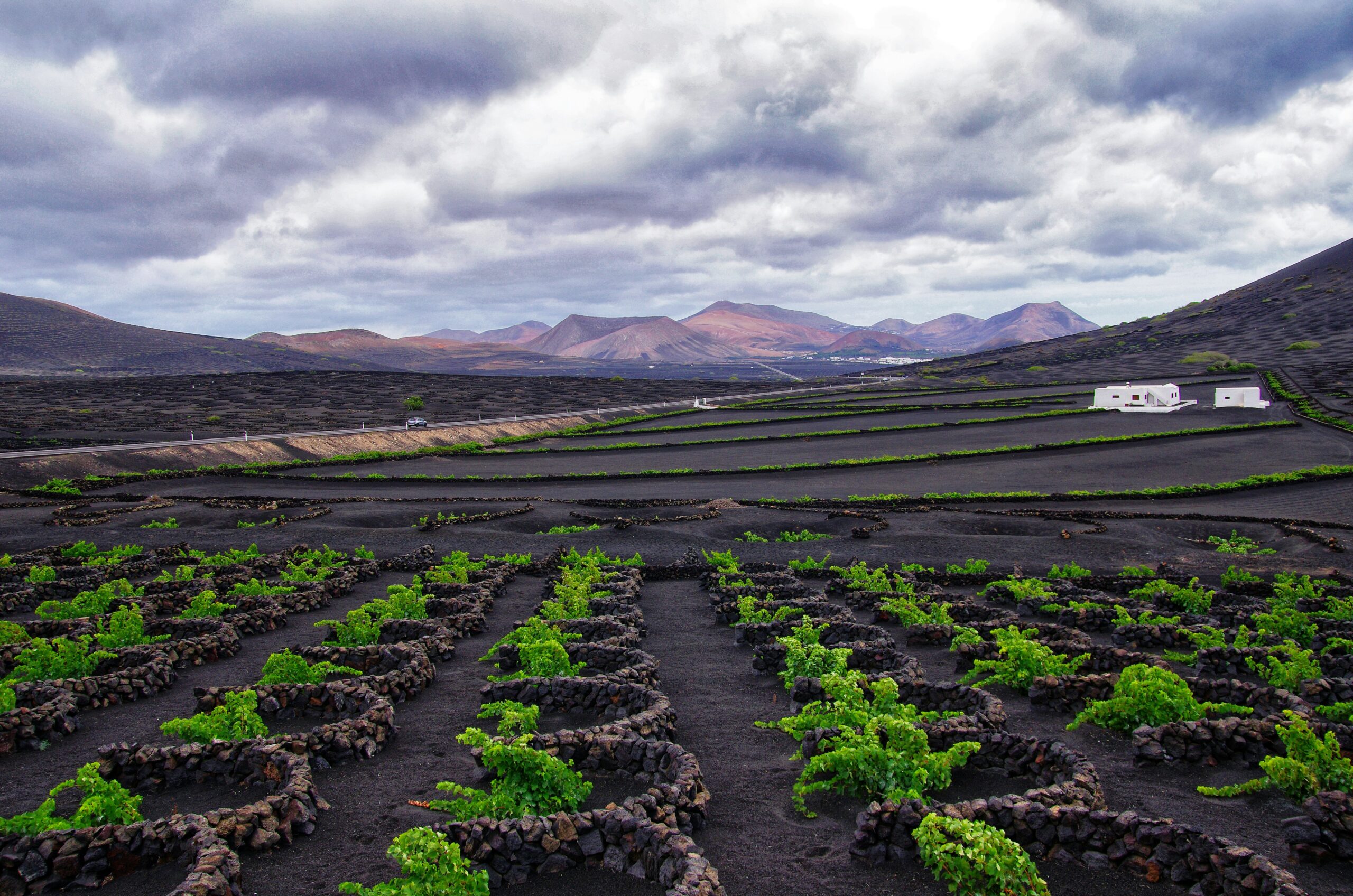
The most beautiful twist in the whole story is La Geria. When the eruptions covered the farmland in metres of black ash, it looked like ruin. But the islanders soon discovered that the ash held a secret: it soaked up the night dew and kept the ground below moist and cool, even through the rainless summers.
So they dug — thousands of cone-shaped pits down through the ash to the old soil, planted a single vine in each, and ringed it with a low curved wall of lava stone to break the wind. The result is one of the strangest vineyards on earth, and a crisp, mineral wine — Malvasía Volcánica — found almost nowhere else. El Grifo, founded in 1775, is among the oldest wineries in all of Spain. Catastrophe, turned by patience into something you can pour into a glass.
And then, suddenly, green
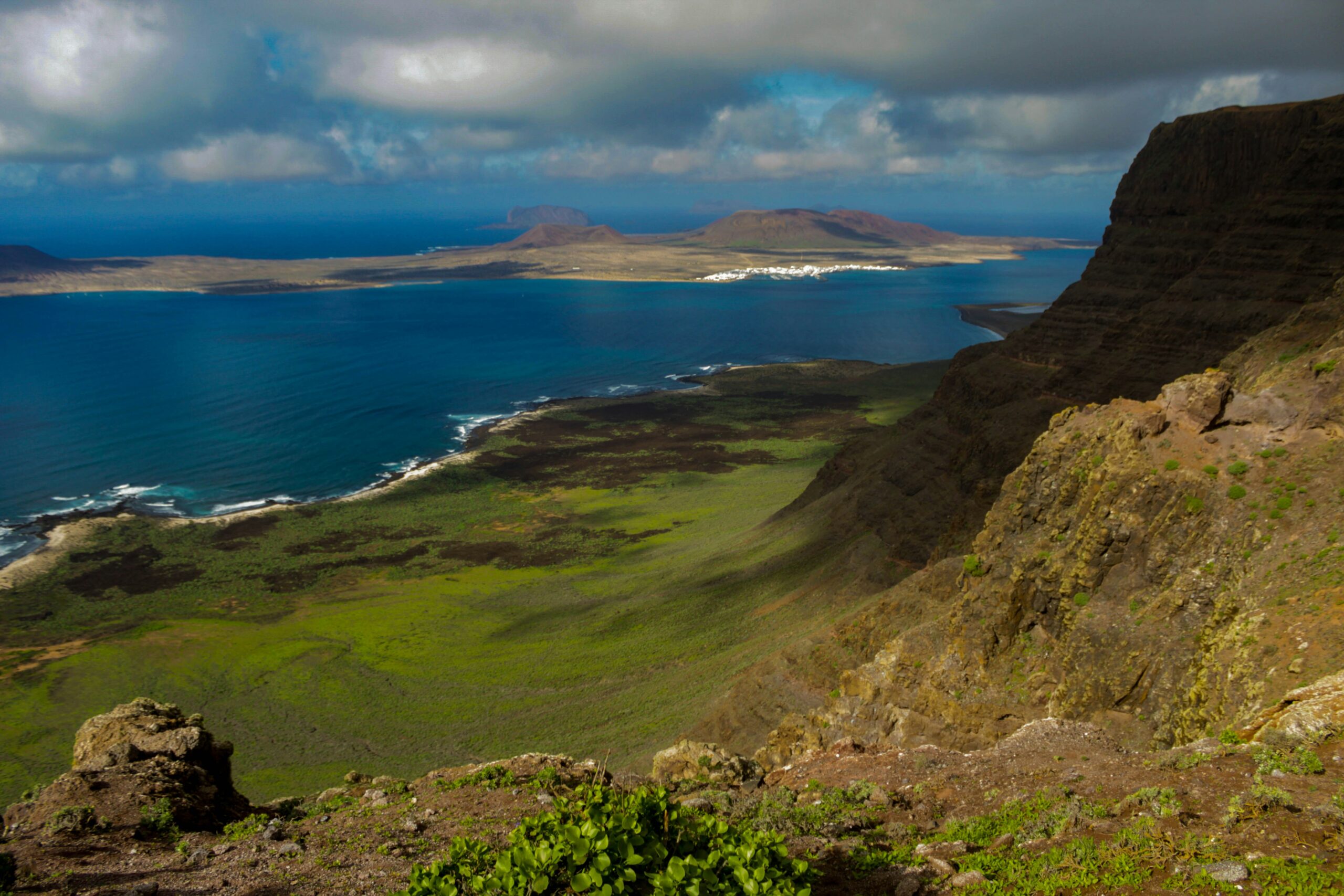
Just when you’ve decided Lanzarote is all black and fire, the north answers back. Drive up toward the Chinijo Archipelago natural park — the largest marine reserve in Europe — and the lava gives way to green ridges, palm valleys and cliffs plunging into a turquoise sea.
This is the island’s quiet counter-argument: that out of all that destruction came astonishing variety. In a single day you can cross from a Martian crater to a green oasis, from black sand to a white lagoon. Few places on earth pack so many worlds into so little ground.
Lanzarote by the numbers
A small island that punches absurdly above its weight.
Why it all hangs together
The thing people misunderstand about Lanzarote is that it isn’t trying to be the Caribbean, or the Mediterranean. It offers something entirely its own: volcanic drama, Atlantic energy, hidden coves, wine from ash, and a quiet, low-rise beauty held together by one artist’s vision.
Stop seeing it as a list of separate attractions and you start to feel it as one continuous environment — a single geological masterpiece you happen to be standing on. And that’s the moment Lanzarote really hits you: not at any one sight, but when you realise the whole island is the sight.
Fire on one side, turquoise on the other
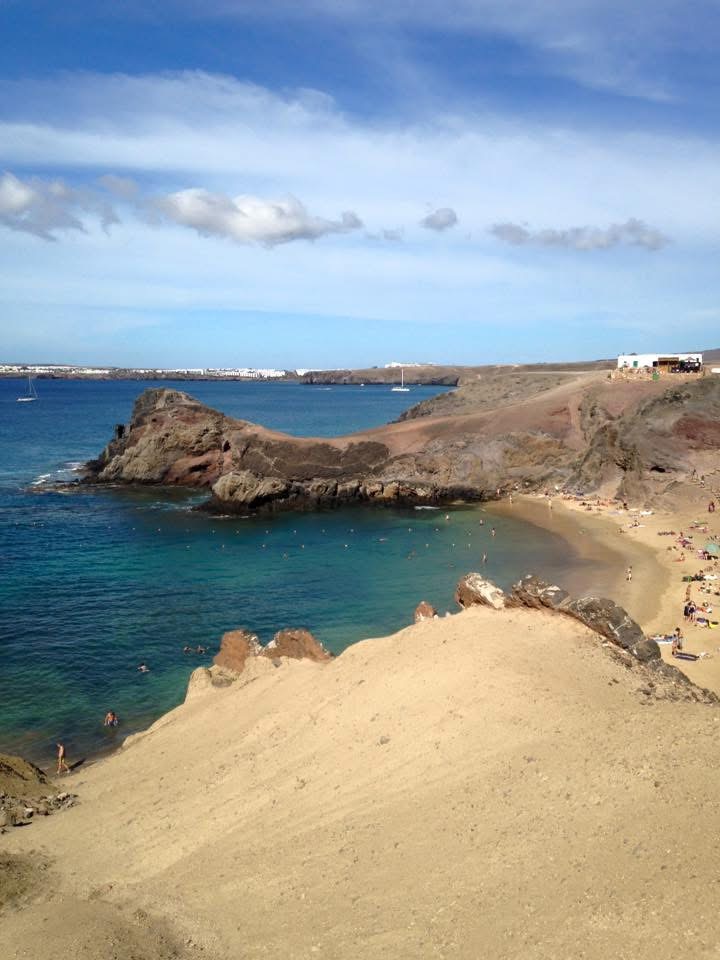
For all its black drama, Lanzarote keeps a softer promise on its southern shore. Tucked into the old cliffs of Los Ajaches, the golden coves of Papagayo hold some of the clearest, calmest water in the Canaries — turquoise against ochre rock, sheltered from the trade winds.
It’s the final piece of the puzzle: the same island that gives you Mars-red craters and seas of lava also hands you a quiet cove to swim in by lunchtime. Fire and water, on the same small map. That’s the trick Lanzarote pulls — and the reason people fall for it.
🌅 The island has everything
Fire and green. Black sand and white lagoons. Wild Atlantic and sheltered coves. Ancient craters and a living, working culture that grew up on them. Lanzarote doesn’t shout about any of it — it just quietly has everything you need, and nothing you don’t.
Come for the volcanoes. Stay for the way the whole island makes you slow down and look closer. That’s the real Lanzarote — and once you’ve felt it, it stays with you.
Ready to feel it for yourself?
Start planning the trip — the island does the rest.
Some links above are affiliate links. If you book through them it costs you nothing extra and helps keep Coastal Canary Life running.
Born from fire, made for slowing down ✦