Coastal Canary Life
Best & Hidden Beaches in Fuerteventura
150 km of coast, more than 150 beaches — from turquoise lagoons to wild, end-of-the-road sand. Here’s where to point the car.
Fuerteventura has the best beaches in the whole Canary archipelago — that’s not local pride, it’s just true. White jable sand made from crushed seashells, turquoise lagoons, black-sand coves and vast empty stretches where you’ll see no one for hours. This is the honest rundown: the famous ones worth the hype, the hidden ones worth the effort, and — crucially — which are safe to swim and which are just for looking.
The one rule Wind decides everything here. A stunning beach becomes miserable in a gale. The south (Jandía) and sheltered south-east coves stay calmer and warmer; the wild west coast is for scenery, not swimming. Keep your plan flexible and chase the leeward side.
The famous ones — worth the hype
Grandes Playas de Corralejo
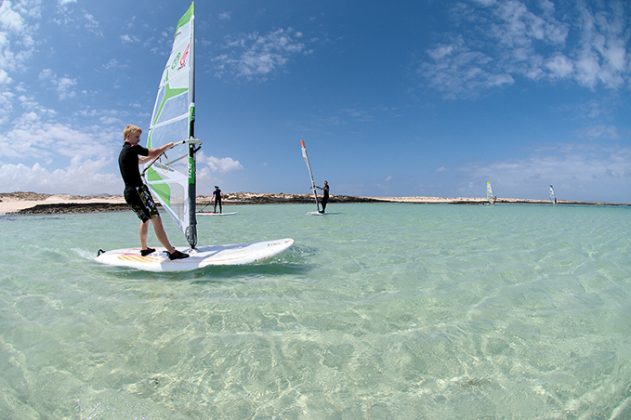
Nine kilometres of white-sand paradise running alongside the Corralejo dunes, with crystal-clear turquoise water and views straight to Lobos and Lanzarote. Easy to reach, vast, and protected — the all-round crowd-pleaser, brilliant for families and long shoreline walks. The jable sand is so fine it’s basically a natural skin spa.
Heads up: being open and northern, it catches the wind — and Flag Beach at the Corralejo end is a kitesurf hotspot. Nudism is common at the quieter far ends.
Playa de Sotavento
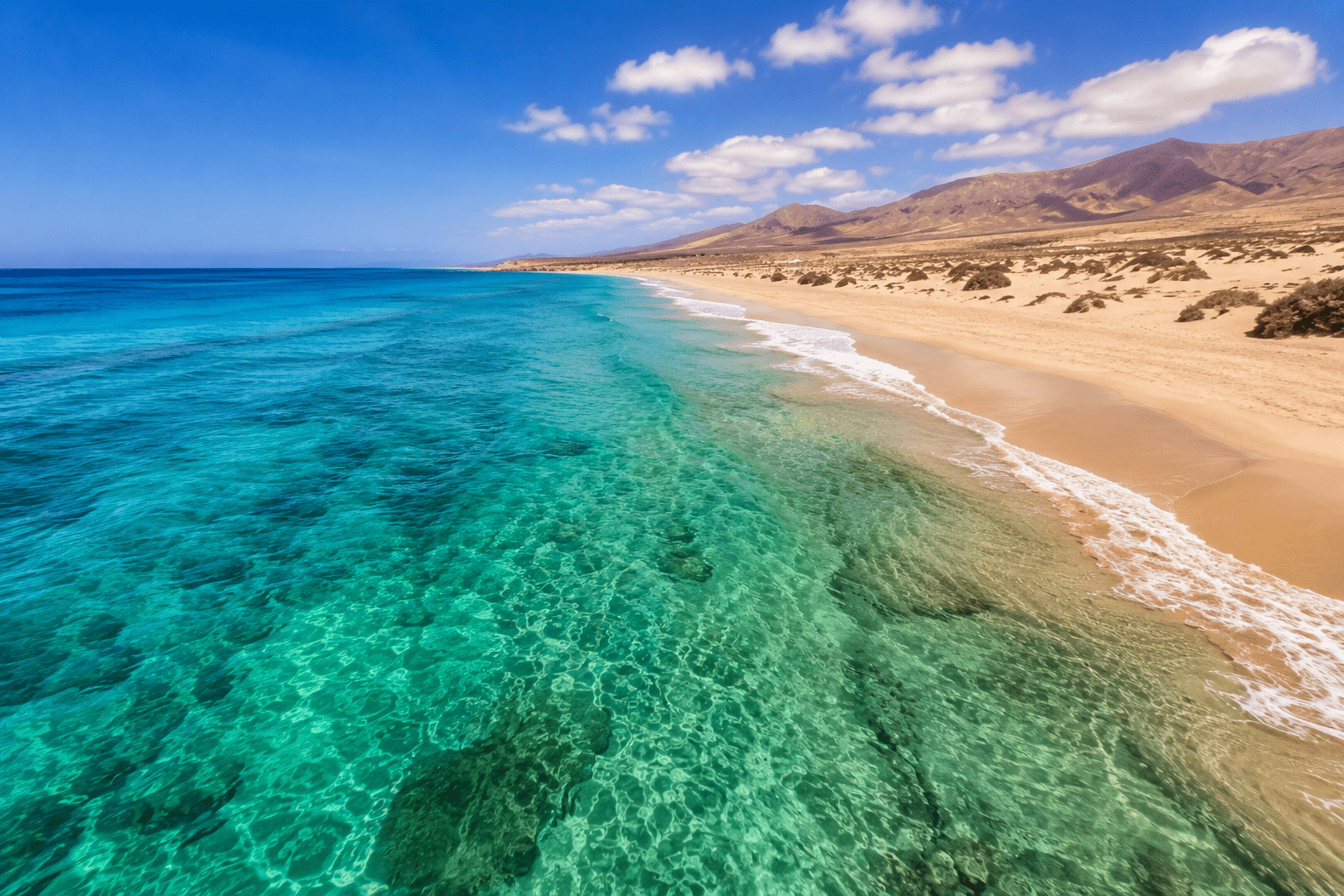
The postcard. Almost 10 km of golden sand on the Jandía peninsula, where at low tide a sandbar traps a vast, shallow turquoise lagoon — warm, calm, surreal. World-famous for windsurfing and kitesurfing (it hosts a World Cup), but its sheer size means you can always find a quiet patch. Sections include Risco del Paso, La Barca and Malnombre.
Good to know: the lagoon depends on the tide — check tide times to catch it full. There’s an official nudist area too.
Playa de Cofete
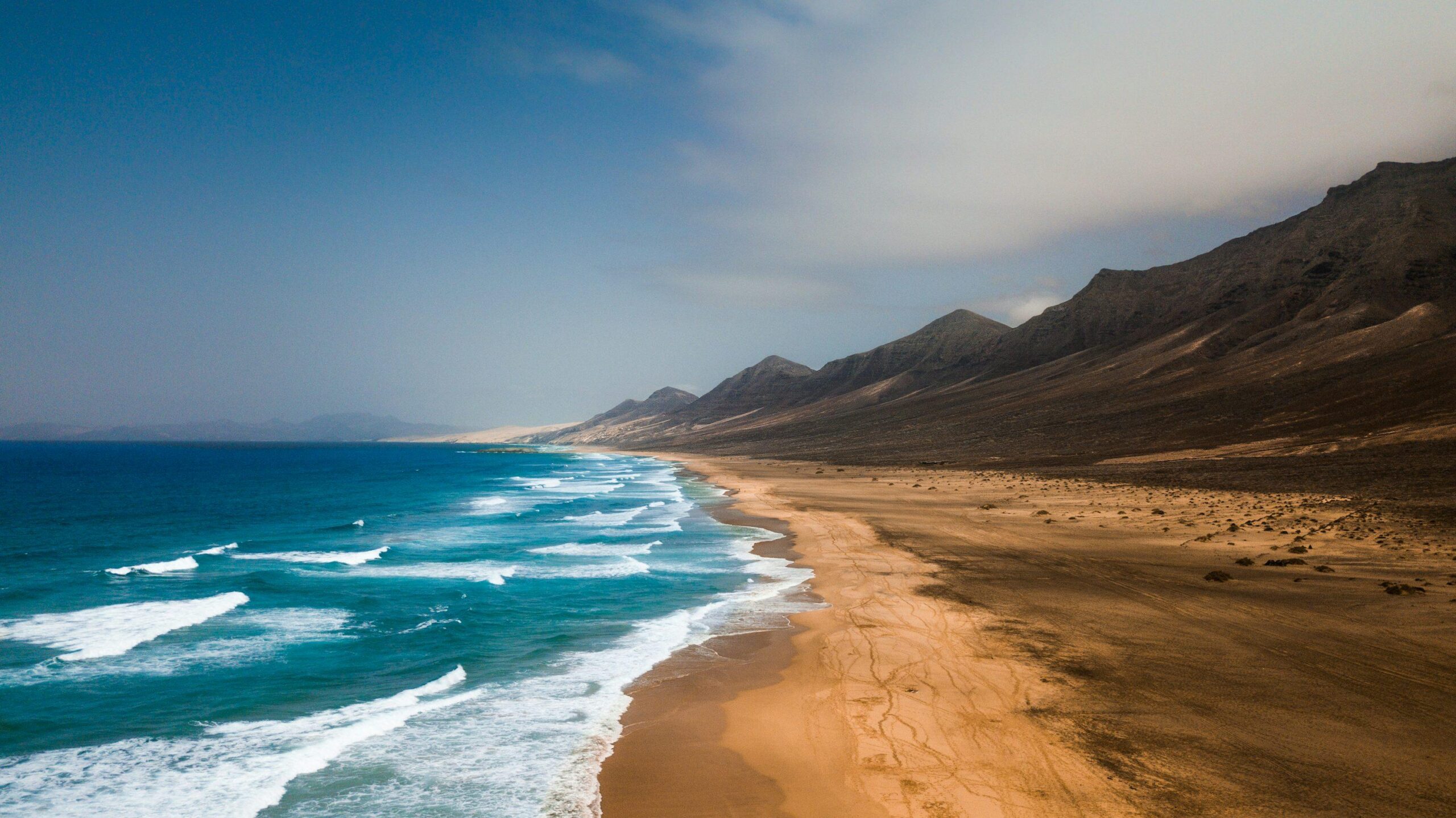
The island’s most jaw-dropping beach, and many people’s favourite in the Canaries: 12 km of wild, undeveloped sand backed by raw mountains, deep in the Jandía Natural Park, with the mysterious Villa Winter above. Mist, spray and total emptiness — a place for hikers and photographers, not loungers.
The honest catch: reached by a long, rough unpaved track (go by 4×4 tour), and the rip currents are too strong for swimming. Come for the awe, not the dip.
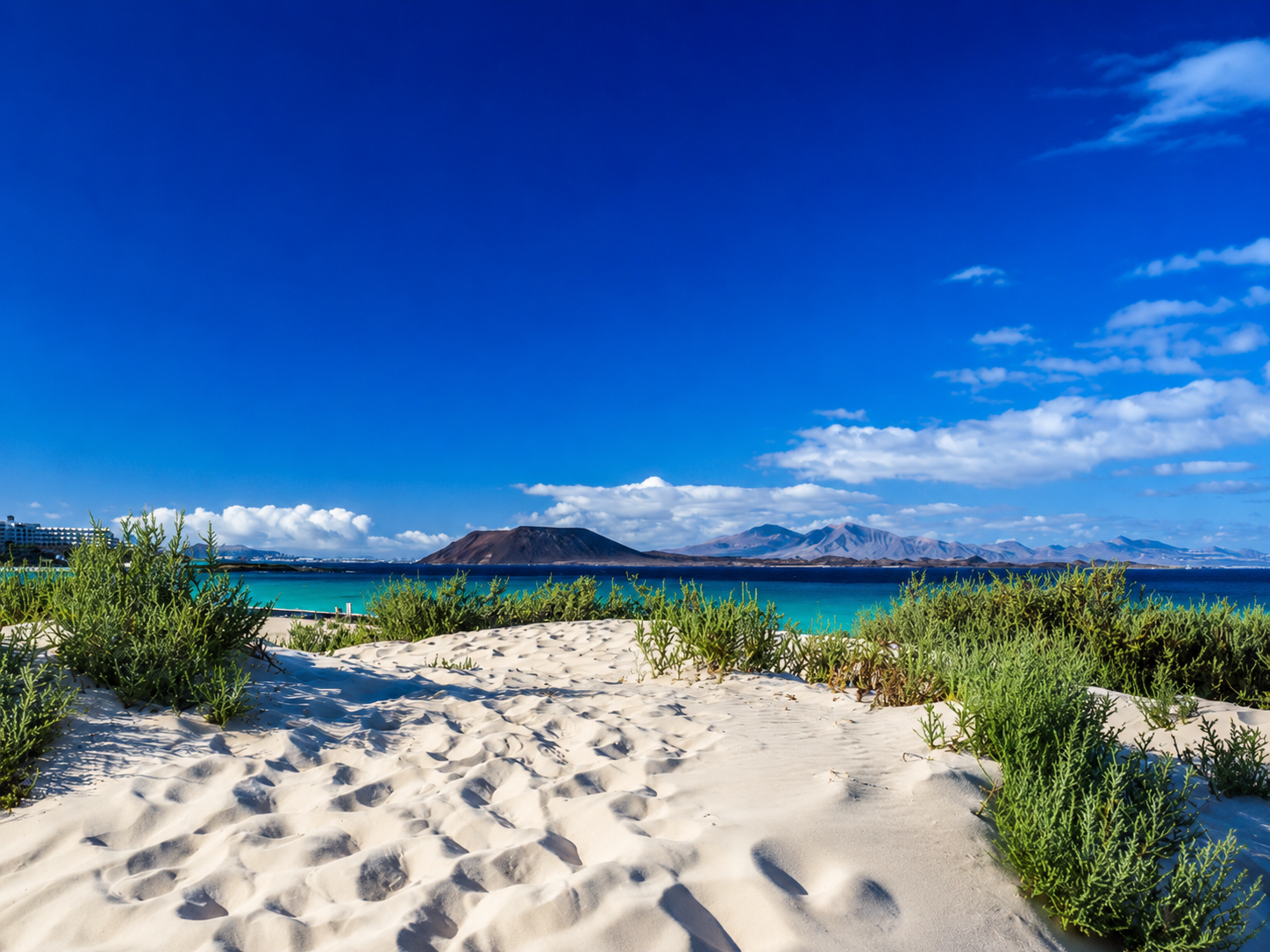
El Cotillo lagoons & La Concha
North of the fishing village of El Cotillo, a string of sheltered white-sand coves and shallow turquoise lagoons (Los Lagos) with calm, warm water — the best family-and-relax swimming on the island. Playa de la Concha is the gem: a protected, postcard bay. Sea-view fish grills and cocktail bars are a two-minute walk away.
Why locals love it: sheltered, gorgeous and walkable to dinner — and sunsets here are some of the island’s best.
The hidden ones — worth the effort
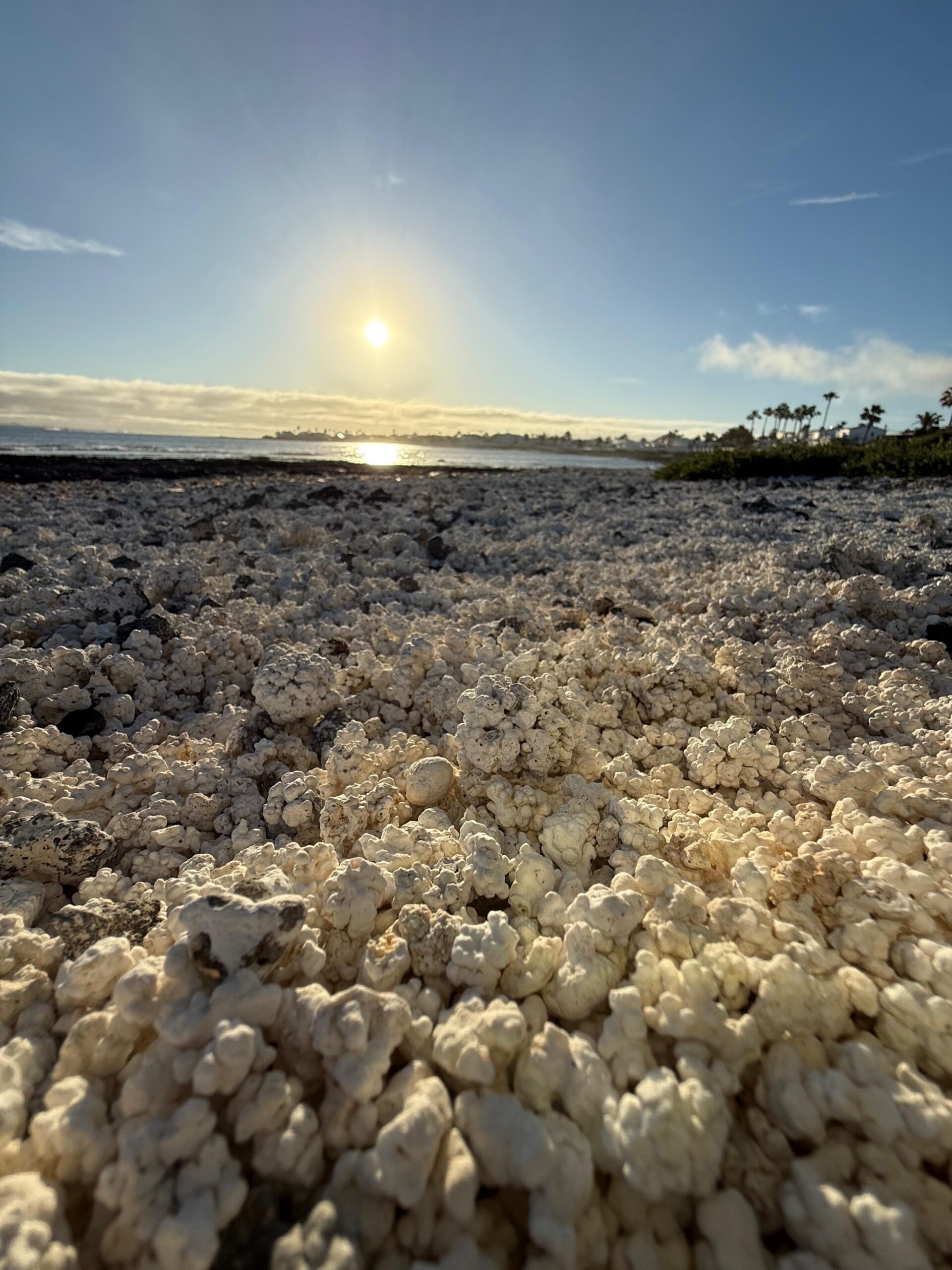
Popcorn Beach
The viral one near Corralejo: its “sand” is actually rhodoliths — white calcareous algae fossils that look exactly like popcorn. Wildly photogenic and genuinely unique. Please don’t take any home — they’re fragile and protected, and the pile only shrinks.
Catch: it’s a rocky shore for photos, not a sunbathing-and-swimming beach. Go early, it’s small and popular now.
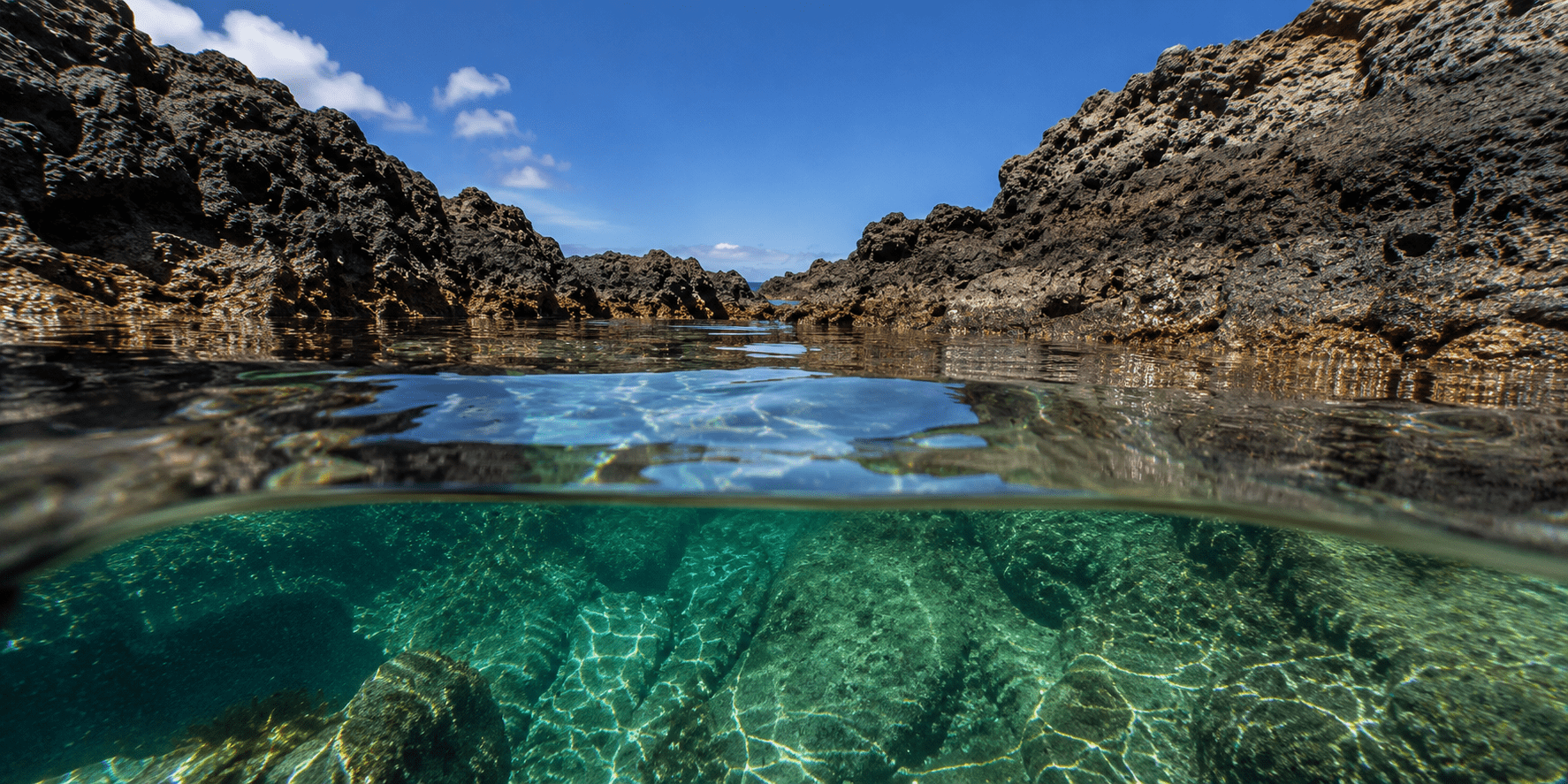
Aguas Verdes natural pools
On the rugged west coast, a series of natural rock pools carved into black volcanic stone, filling with Atlantic water — a wild, dramatic alternative to a sandy beach when the tide and swell are gentle. Raw, beautiful, and refreshingly local.
Catch: the west coast is powerful — only enter on calm days and at low tide, never in big swell. Wear water shoes for the rock.
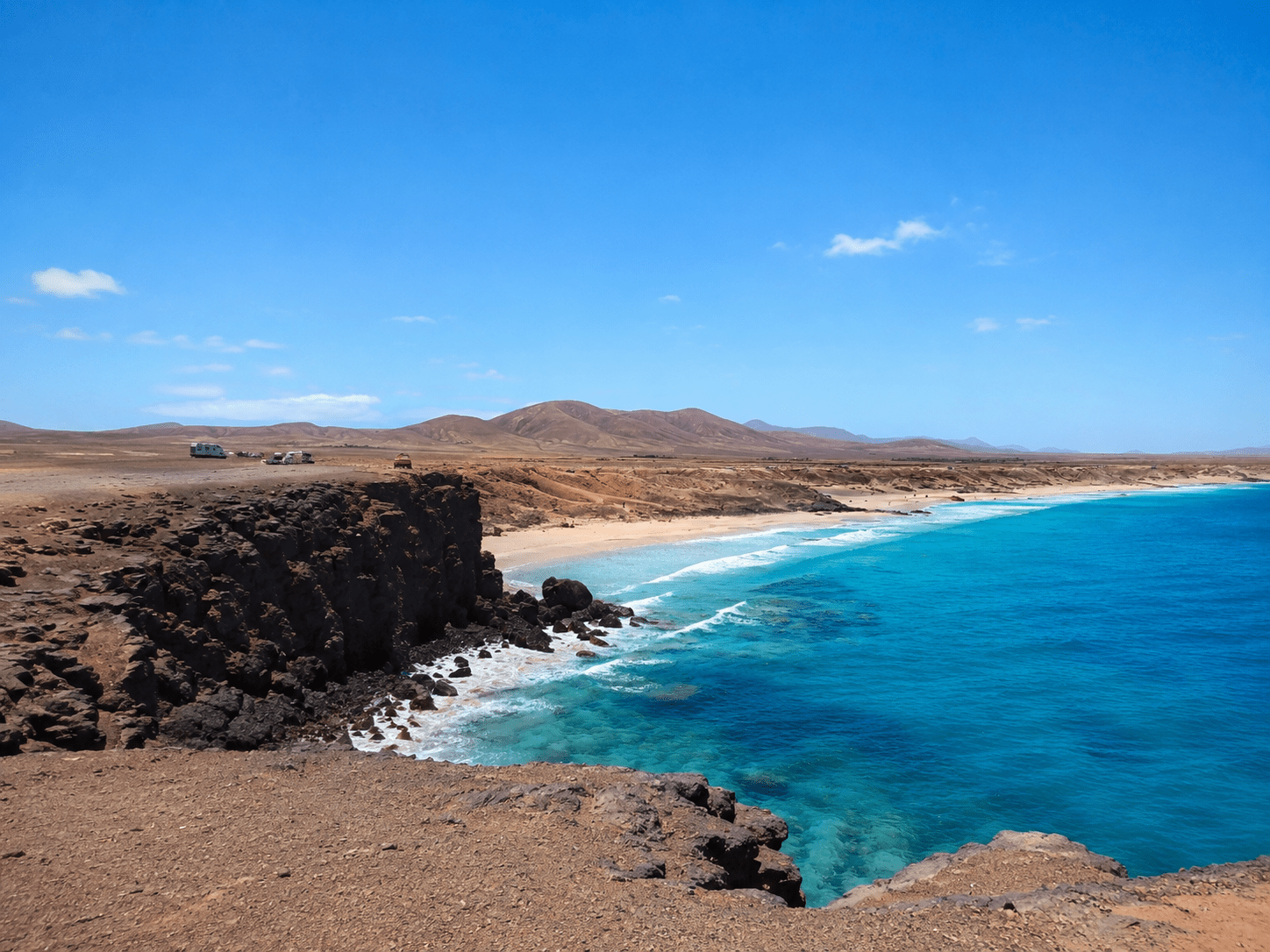
Playa de Esquinzo (El Cotillo)
The wild one near El Cotillo (not the developed Esquinzo in the south): golden sand under dark cliffs, a sanctuary for surfers and solitude-seekers, often completely deserted. The kind of empty, dramatic beach that makes Fuerteventura, Fuerteventura.
Catch: 6 km of unpaved road plus a steep 200 m descent, and strong currents — strictly sunbathing and scenery, not swimming.
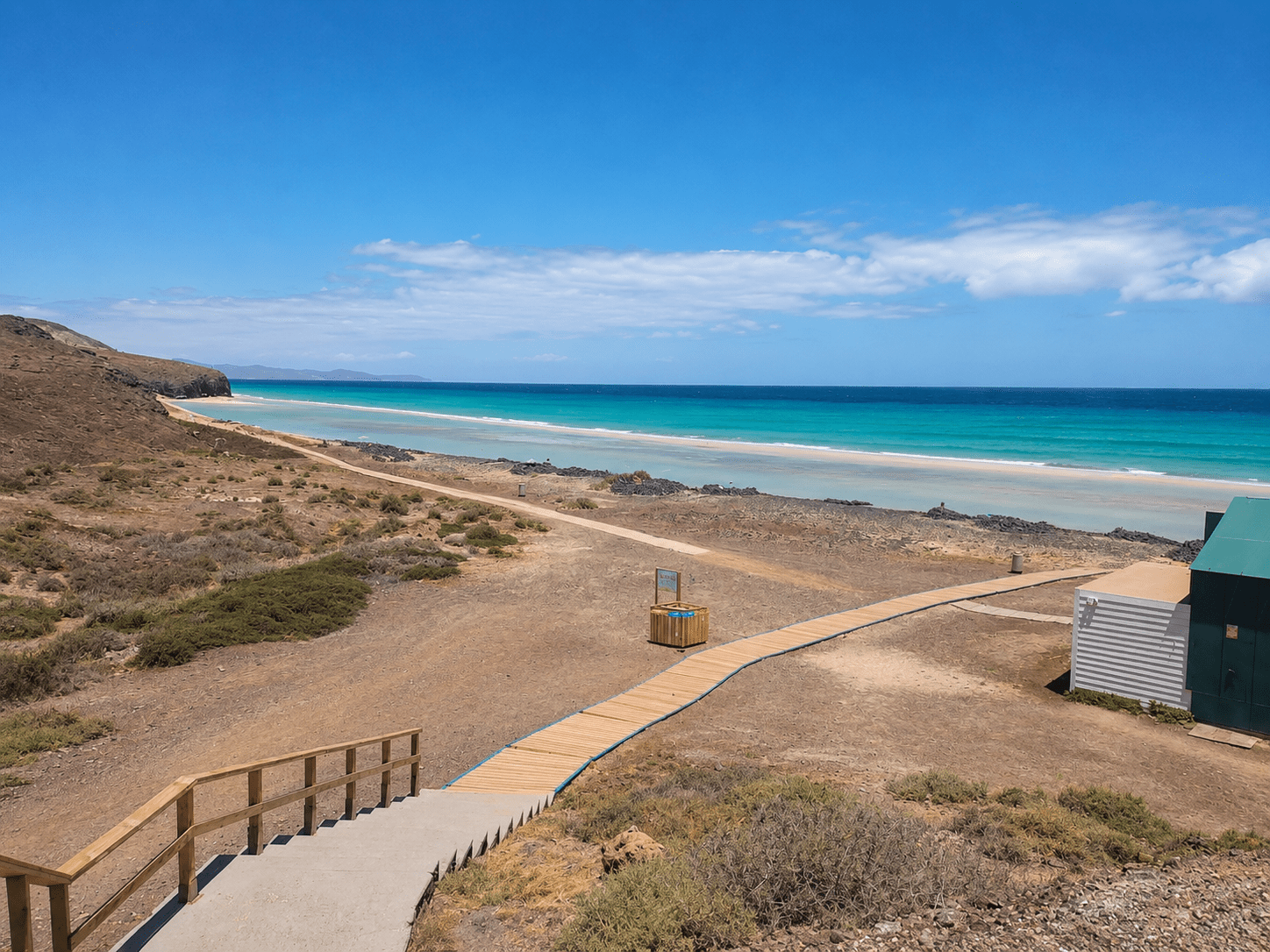
Playa Esmeralda & Mal Nombre
For the calmest water on the island, head to the sheltered south-east coves. Playa Esmeralda is often called the calmest beach on Fuerteventura — lake-like and protected — and nearby Mal Nombre (Tierra Dorada) is a quiet, golden, cliff-backed stretch. The antidote to the windy big-name beaches.
Why go: when the north is blown out, this coast stays swimmable and serene. Great with kids.
🏖️ Beach-smart in Fuerteventura
- Read the flags & the sea. West-coast and exposed beaches (Cofete, Esquinzo, Garcey) have powerful rip currents — beautiful to see, dangerous to swim. When in doubt, stay out.
- Chase the lee. If the wind’s howling on one coast, drive to the sheltered side — the south and south-east coves are your calm-water friends.
- Tides matter. Sotavento’s famous lagoon and the El Cotillo pools change completely with the tide — check times before you drive out.
- Take nothing. Popcorn Beach rhodoliths and jable sand are protected — photos only. Leave the beach as you found it.
- Bring shade & water. Most beaches have little or no natural shade, and the wild ones have no facilities at all. Pack a windbreak, water and sun cover.
Make the most of the coast
The best beaches are spread right across a big island — here’s what makes them reachable.
Some links above are affiliate links. If you book through them it costs you nothing extra and helps keep Coastal Canary Life running. Conditions, access and safety change with weather and tide — always check locally and respect the flags before you swim.
See you in the water (or watching it) ✦