Coastal Canary Life
The Island Has Everything
How a flat, empty desert in the Atlantic turns out to hold more than islands twice its size — and how it has, in fact, only what you actually need.
People come back from Fuerteventura and say the same odd thing: “there’s nothing there.” They mean it as a complaint, and as the highest compliment, and they don’t realise they’re saying both at once.
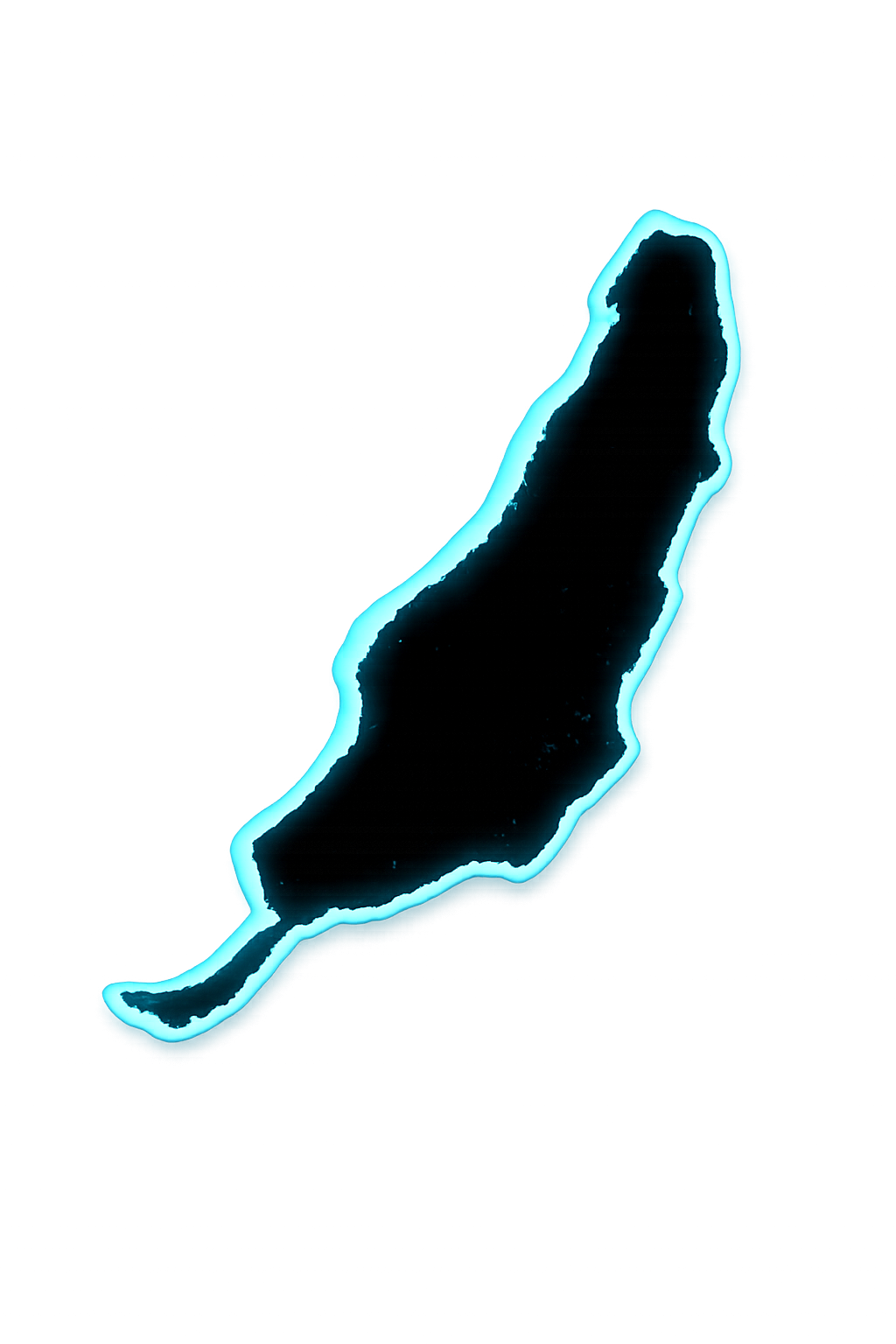
Because the secret of this island is that the emptiness is the everything. Fuerteventura doesn’t shout. It doesn’t have a 3,700-metre volcano like Tenerife or a green jungle interior like La Gomera. What it has is space — miles of it — and once you slow down to the island’s speed, you notice that this “nothing” quietly contains a desert, an ocean, more than 150 beaches, world-class waves, 600 years of history and some of the darkest, most star-filled skies in Europe. All on a strip of land you can drive end to end in a couple of hours.
Fuerteventura by the numbers
Capital: Puerto del Rosario · UNESCO Biosphere Reserve since 2009 · and yes, still more goats than people.
A desert that meets the sea
Start with the thing nobody expects: Fuerteventura is genuinely a desert. It’s the oldest of the Canary Islands — around 20 million years old, the most worn-down and the flattest, with 71% of its land sitting below 200 metres. It lies barely 96 km off the coast of Africa, closer to the Sahara than to mainland Spain, and you feel it: wind carries African dust across the dunes of Corralejo, the light is huge and flat, and goats genuinely outnumber people — which is why the capital was once called Puerto Cabras, “Port of Goats”.
And yet this desert ends in the finest coast in the whole archipelago. Over 150 beaches along roughly 304 km of coastline — white sand in the south at Jandía and Sotavento, black volcanic shingle on the west, turquoise lagoons at El Cotillo. The whole island, land and surrounding sea, was declared a UNESCO Biosphere Reserve in 2009. Desert and ocean pressed right up against each other: that contrast is the island’s entire personality.
An ocean that does everything
If the land is still, the water never is. Fuerteventura’s wind — the thing first-timers grumble about — is exactly what makes it one of Europe’s great ocean playgrounds. (The name actually comes from fuerte and ventura, “strong fortune” — though everyone assumes it means the strong winds.) It’s a windsurf and kitesurf mecca that hosts a World Cup event each year at the Sotavento lagoon. Its North Shore holds volcanic reef waves that draw serious surfers all winter, while gentle beach breaks teach total beginners in summer.
And out in the warm Atlantic off the south coast there are dolphins, turtles and whales. You can spend a morning watching them from a boat and an afternoon floating in a lagoon so shallow and warm it feels invented. Few islands this size give you that range of water in a single day.
More history than it lets on
Here’s the part day-trippers miss entirely. Drive ten minutes inland and the beaches vanish, replaced by stone villages older than most of Europe’s cities. Betancuria was founded in 1404 — the island’s first capital, a green pocket of colonial churches and cobbled lanes in the volcanic hills. Around it: windmills, cheese farms, the grand Casa de los Coroneles in La Oliva, and a slow rural culture the resorts never touch.
That culture you can taste. Queso Majorero — the first Spanish goat’s cheese to win protected DOP status, marked by the imprint of palm leaves on its rind — is genuinely world-class, and it comes from these inland farms. Add papas arrugadas with mojo, fresh fish grilled in west-coast villages, gofio and local honey: an island that feeds you properly the moment you leave the buffet behind.
And then the sky
When the sun goes down — and Fuerteventura’s sunsets over the Atlantic are the kind you stop and watch — something else arrives. With so few people across so much space, the night sky here is extraordinary. Away from the resorts, out by Betancuria or the dunes, the stars come out in their thousands and the Milky Way arcs right over you. The same emptiness that felt like “nothing” at noon becomes, after dark, one of the fullest things you’ll ever look at.
The honest bit
I won’t pretend it’s for everyone. If you need buzz, nightlife, a packed itinerary and a new headline sight every hour, Fuerteventura will frustrate you — and you should probably go to Tenerife or Gran Canaria instead. The island asks you to downshift. The wind is real, the distances are real, the best stuff is spread out and often unsigned, and you’ll want a hire car to find it.
But if you let the place set the pace, you get the rarest thing a holiday island can offer: room to breathe. A beach to yourself. A road with no traffic. A village with no tour buses. A sky with no light. So no — Fuerteventura doesn’t have everything. It has exactly what you need, and almost nothing you don’t. Turns out that’s the same thing. 😏
Come for the beaches. Stay for the space. ✦
Find your Fuerteventura
Wherever this island speaks to you, here’s where to start.
Some links across these guides are affiliate links — if you book through them it costs you nothing extra and helps keep Coastal Canary Life running. I only point you to things genuinely worth your time.