Plan your trip · Hiking & Nature
Hiking & Nature in Gran Canaria
Pine forests, volcanic peaks, sacred monoliths and dam-side camps under some of the clearest skies in Europe. Here’s how to walk the roof of the island — and how to sleep up there, the right way.
Most people fly to Gran Canaria for the beaches and never look up. But the real magic of this island is in the middle: a “miniature continent” of cumbre (summit) pine forest, deep barrancos (ravines), white mountain villages and the unmistakable silhouette of Roque Nublo. This guide covers the best trails with honest details — distance, climb, difficulty, when to go, what to wear and pack — plus how to do a weekend with a night camping in the mountains, Camino-de-Santiago style, legally and safely.
⚠️ Camping in the mountains? Read this first
In Gran Canaria you cannot just pitch a tent wherever you like. Sleeping outdoors — even without a tent — counts as camping, and is only allowed in designated zones run by the Cabildo (island council), with a permit. Camping on beaches is forbidden. No permit = real fines.
The designated free zones (permit still required) are up in the cumbre: Llanos de la Pez, Presa de las Niñas, Llanos de la Mimbre (Tamadaba), Corral de los Juncos, Bailico and a few more.
How and when to request it:
- Online at acampadas.grancanaria.com (register once + ID validation), or by phone +34 928 21 92 29, or in person at the OIAC office in Las Palmas.
- Timing for Cabildo zones: request at the earliest from the first working day of the previous month, and at the latest 3 days before your date. Granted in order of arrival until places run out.
- Other / private land or a multi-stop route: you must apply with at least one month’s notice via a general instance, giving the exact GPS/UTM coordinates of each overnight spot, the dates, and the landowner’s authorisation.
- Repeat bookings: you must wait 15 days between requests for the same zone, so everyone gets a turn.
Always check for alerts before you go. In dry or high-risk periods the Cabildo closes zones (Tamadaba and Llanos de la Mimbre have been closed at short notice). Camping is banned during any fire-risk alert. Check the official Cabildo channels the day before.
The best trails
Roque Nublo — the classic
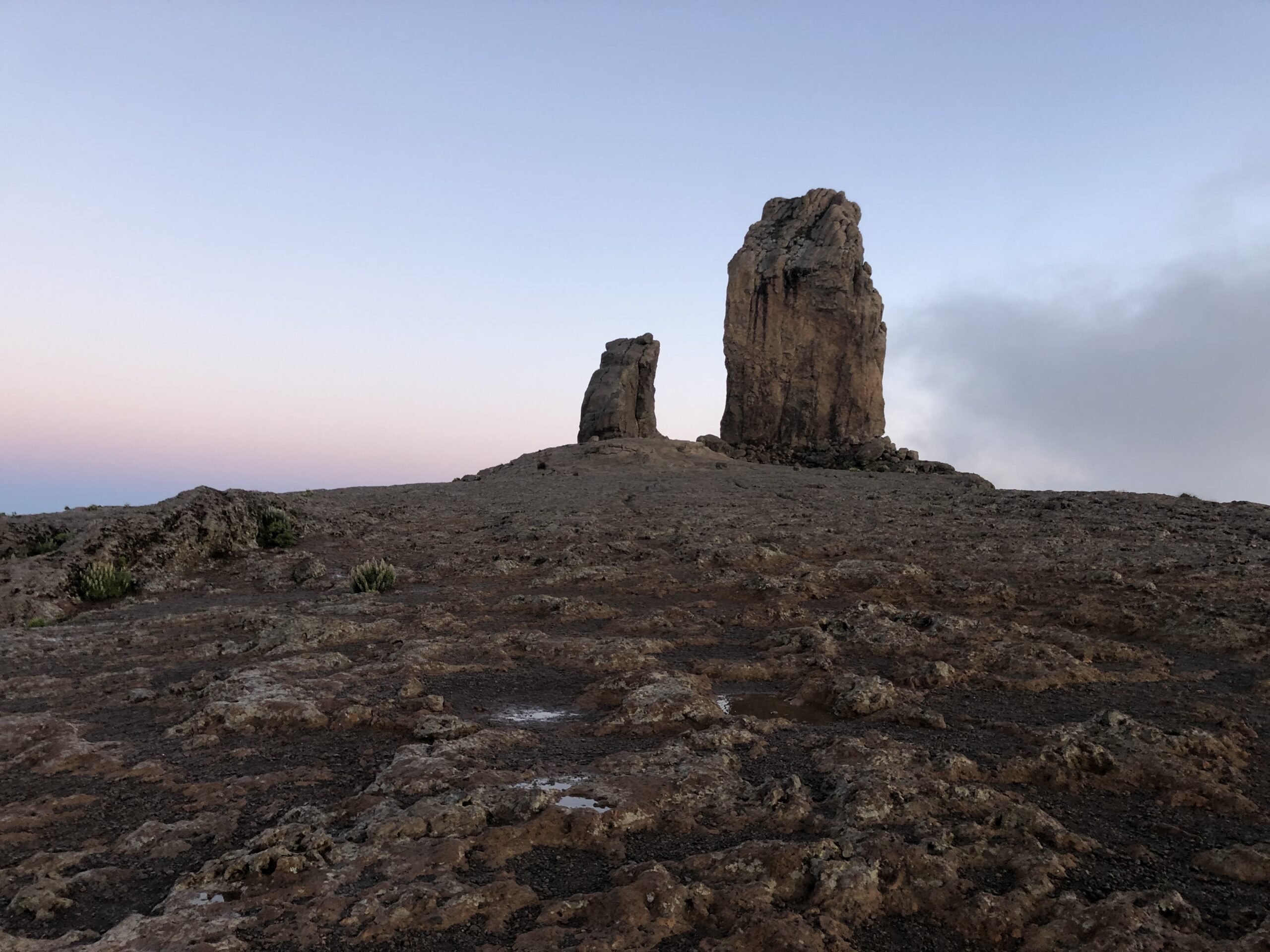
The island’s signature walk and the perfect first hike. From the La Goleta car park on the GC-600, a well-trodden path winds gently up through Canary pines and almond trees to the base of Roque Nublo — an 80-metre volcanic monolith that was a sacred place for the ancient Canarians. On a clear day Mount Teide floats on the horizon across the sea in Tenerife. Short, rewarding, and busy — go early.
⚠️ Booking now required (since Feb 2025): to access from the main Degollada de la Goleta path during peak hours (10:00–17:00) you need a free advance reservation at grancanariasenderos.com — numbers are capped to protect the site. You’re exempt if you arrive on foot from another trail (like the S-51 below), outside peak hours, or are a Tejeda/Artenara resident. Bookings are suspended during fire alerts.
S-51: Llanos de la Pez → Pico de las Nieves → Roque Nublo
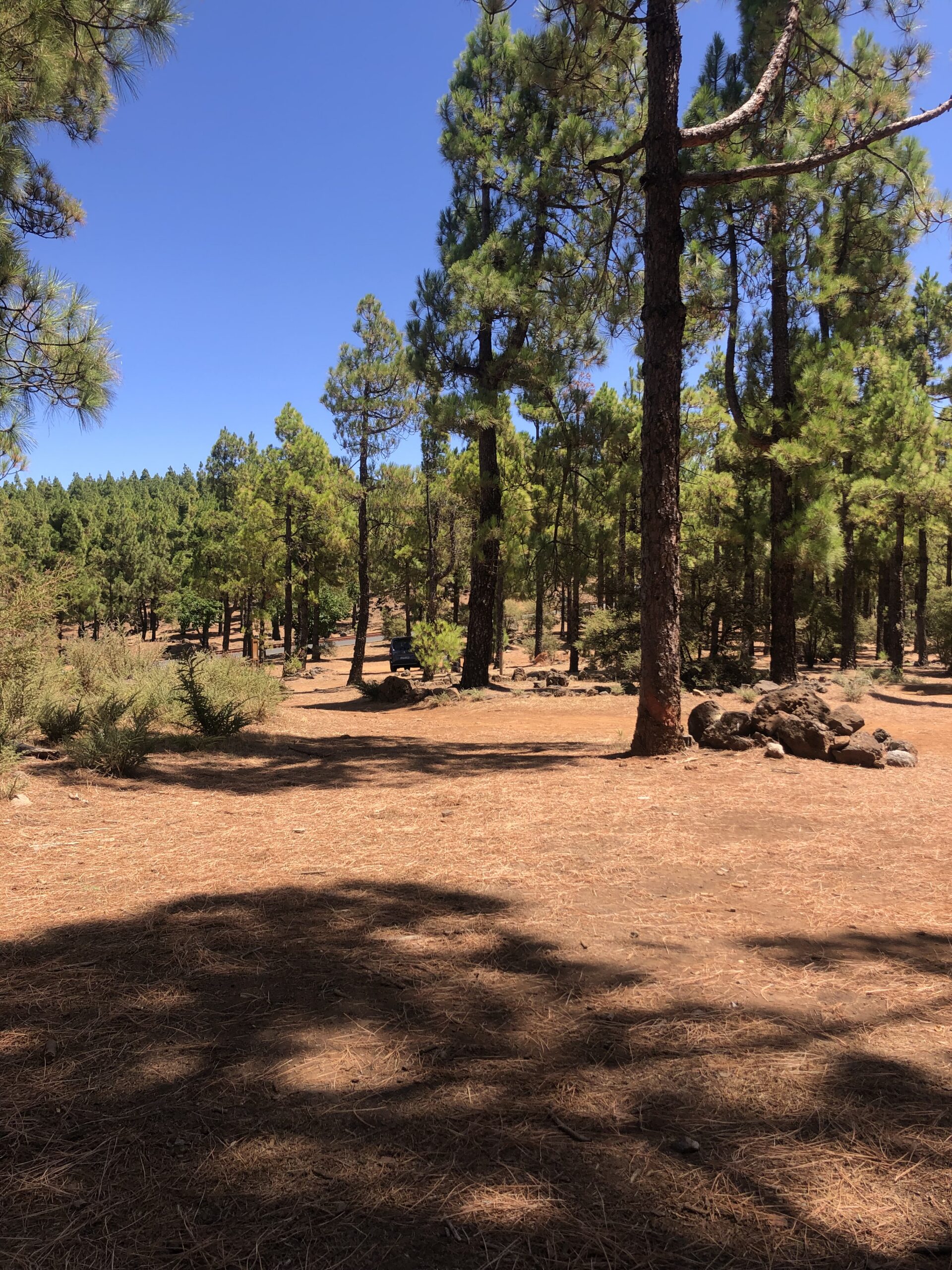
The big cumbre loop, and my favourite full day on the roof of the island. Starting from the Llanos de la Pez recreation area, the S-51 climbs through ancient pine forest past the Díaz Bertrana refuge to Pico de las Nieves — at 1,949 m the highest point in Gran Canaria — then traverses a string of dramatic degolladas (mountain passes) before reaching Roque Nublo, returning past the Presa de los Hornos reservoir. Shaded forest, big silence and views in every direction.
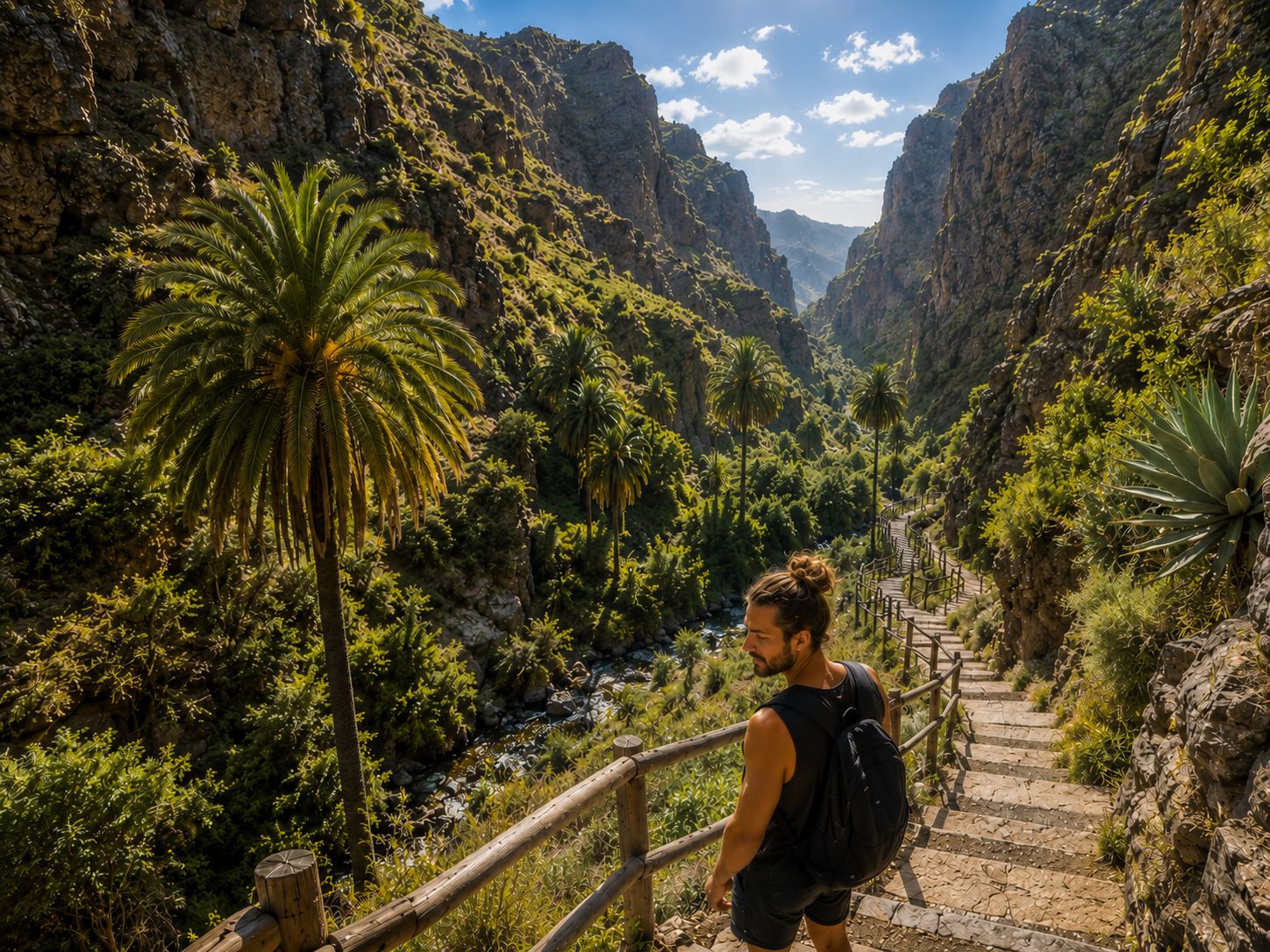
Tamadaba pine forest loop
One of the two great pine forests of the island (with Inagua), Tamadaba is wild, fragrant and far quieter than the Roque Nublo crowds. The circular route from the Tamadaba recreation area runs to Artenara via the Degollada del Humo and Cruz de Acusa, with cliff-edge views down to the north-west coast and, on clear days, out to the sea. The recreation area itself has barbecues, tables, water and toilets — and a permit-only camping zone (Llanos de la Mimbre) nearby.
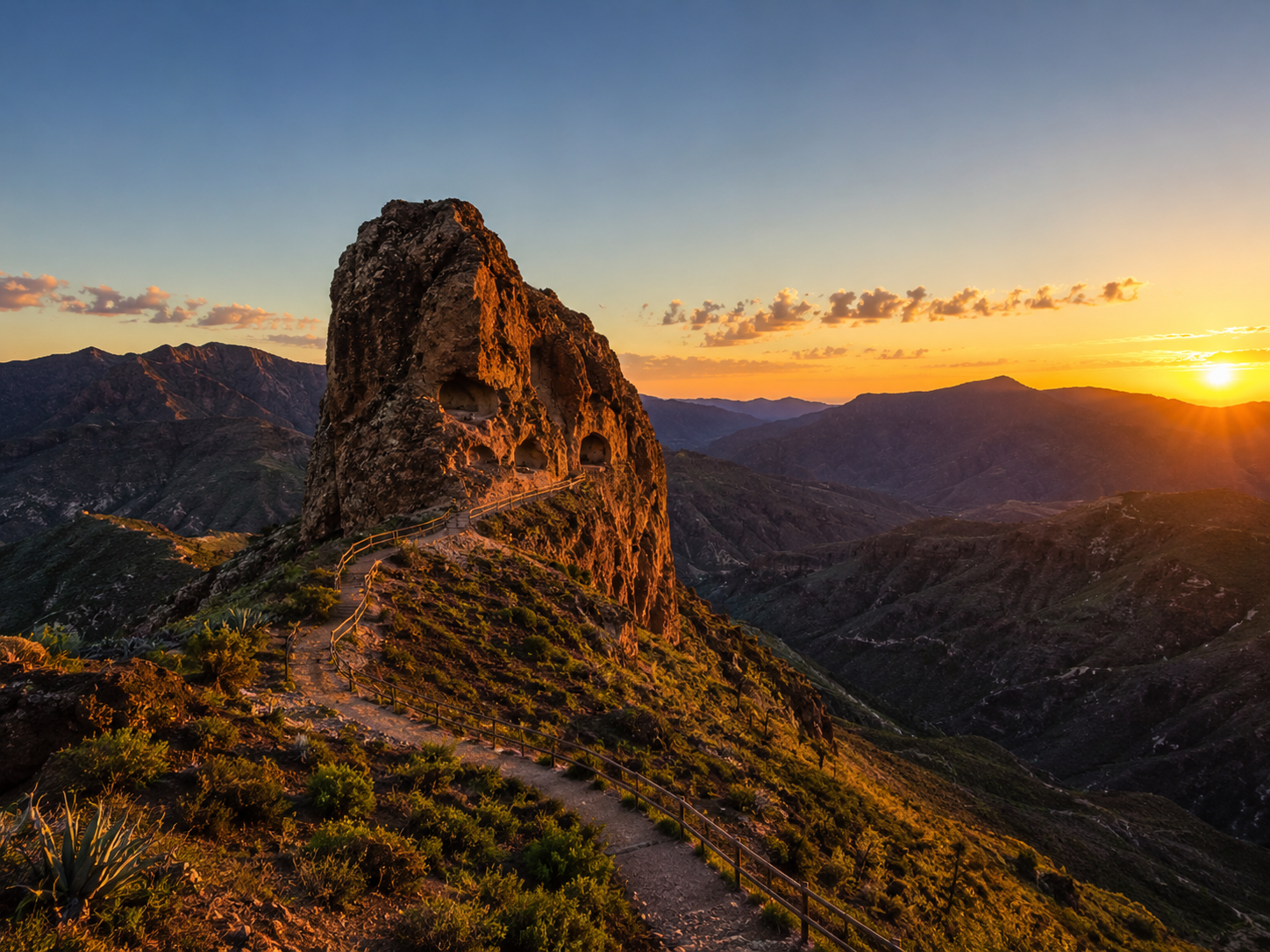
Roque Bentayga — the sacred rock
A short but deeply atmospheric walk to another great volcanic rock — but this one carries history. Roque Bentayga was a sacred site for the ancient Canarians (Guanches), with the remains of an almogarén (ceremonial space) and cave dwellings carved into the rock. It sits at the heart of the Risco Caído UNESCO World Heritage cultural landscape. Quieter than Roque Nublo, it’s perfect for sunset, photography and a feel for the island’s pre-Hispanic past.
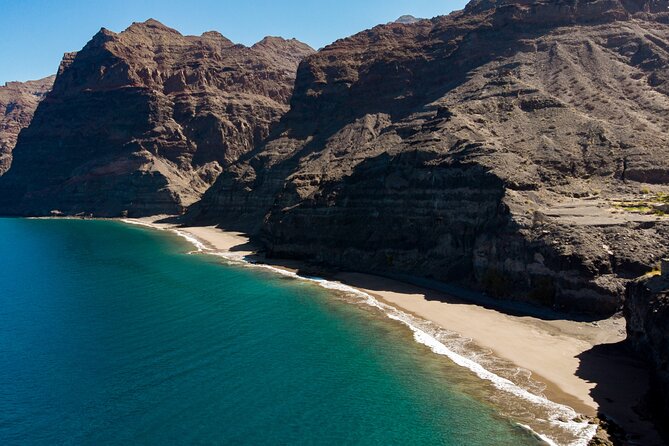
Güigüí — the wild beach trek
For many hikers, this is the most spectacular route on the whole island. A demanding trek across isolated mountains in the wild far west leads to Playa de Güigüí, a vast, golden, almost untouched beach reachable essentially only on foot or by boat. It’s a serious full-day effort — steep, exposed, no facilities — but the reward is one of the most pristine corners of the Canaries, far from any road.
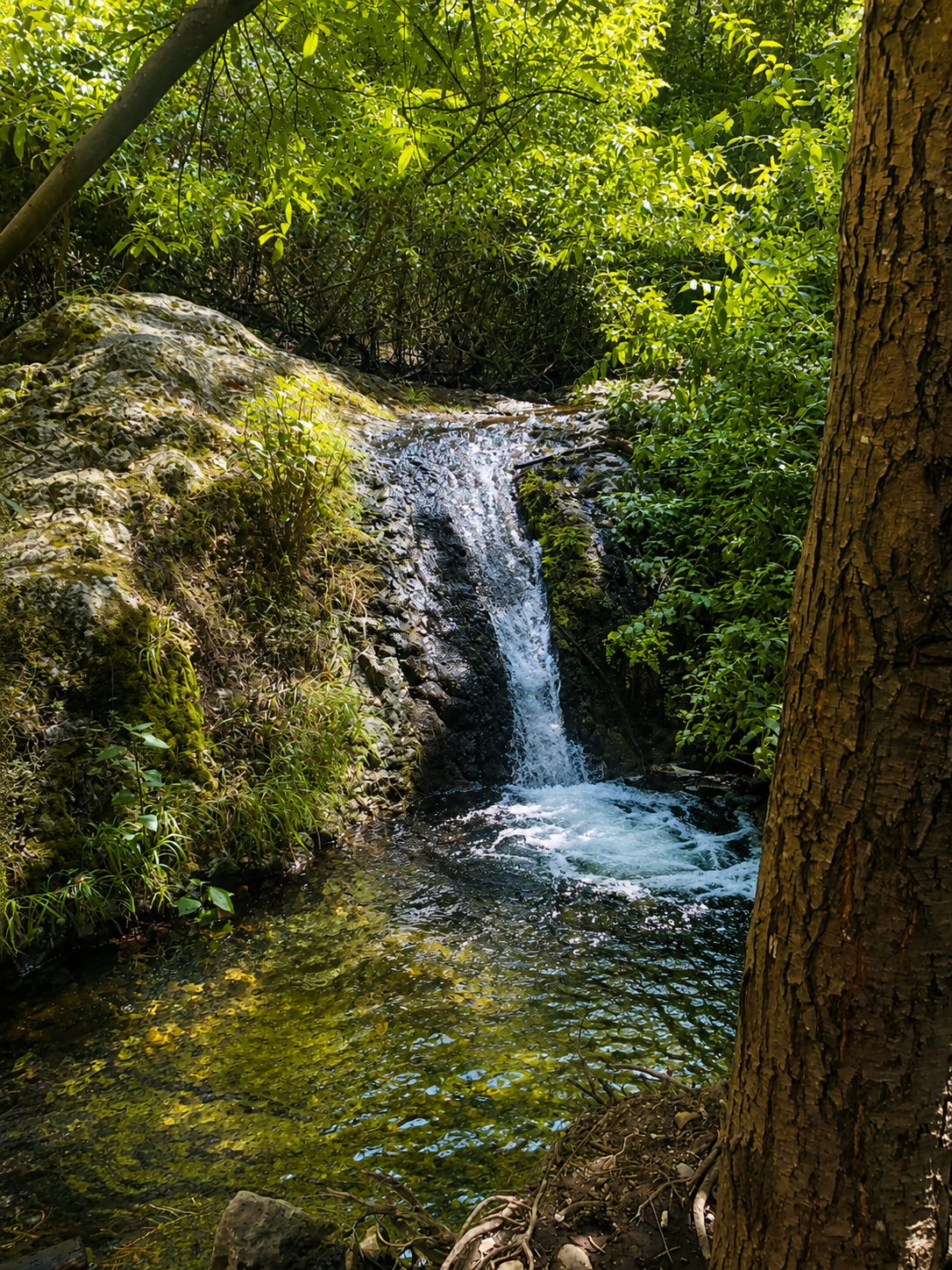
Teror & the green north
Teror is the spiritual heart of Gran Canaria and one of the prettiest towns on the island — wooden balconies, a beautiful basilica, and the famous Sunday market where you buy chorizo de Teror and fresh local produce. It’s the perfect easy day in the green north: wander the historic streets, then take one of the gentle walks into the surrounding hills and laurel-green countryside before lunch in a local guachinche.
A weekend in the mountains — Camino style
Want more than a day hike? Here’s a relaxed two-day route that links the best of the cumbre with a legal overnight in a Cabildo camping zone — slow, scenic, and the kind of adventure you remember. Book your camping permit first (see the box above) and check for alerts before you leave.
Climb the cumbre, sleep under the stars
Start mid-morning at Llanos de la Pez and walk a relaxed half of the S-51 up to Pico de las Nieves for lunch with the whole island at your feet. Wander back through the pines to the Llanos de la Pez camping zone (your permitted spot) in the afternoon, set up before dark, and cook as the sky turns. Up here, far from any town, the night sky is extraordinary — this is one of the best stargazing areas on the island.
Down to the dam & the village cheeses
After sunrise coffee, walk down towards Presa de las Niñas — a reservoir ringed by pines where, if it’s full, you can paddle or simply sit by the water. The route down passes small queserías (cheese farms) where you can taste real local cheese. End in a mountain village like Tejeda — famous for its almond sweets (bienmesabe) — for a long, well-earned lunch before heading back.
Local flavours along the way
Half the joy of walking the cumbre is what you eat along it. The mountain villages are full of tiny family producers selling things you simply can’t find in a supermarket — and stopping to taste them is part of the adventure. A few honest tips on what to look for and where:
🧀 Farmhouse cheeses
Gran Canaria has some of the most awarded cheeses in Europe, and the cumbre is its heartland. Tejeda alone has several small queserías — names like Naroy, El Roque, Cuevas del Rey, El Toscón and Manjar de Tejeda — many with their own herds of goats, making fresh, semi-cured and cured cheeses (even an almond cheese). You’ll also find farm cheese around Artenara and Agaete. Buy direct and you taste the difference.
🍯 Almond sweets & jams
Tejeda is famous for almond: bienmesabe (almond & honey cream), marzipan, polvorones and stuffed almonds — the busy Dulcería Nublo on a Sunday is an institution. Look too for artisan Canarian jams in unusual flavours: aloe vera, papaya, mango, tuno indio (prickly pear) and Tejeda fruit, made with no preservatives.
🥤 Fresh & natural
Along the routes you’ll come across small stands and fincas selling fresh juices, local honey, almonds and aloe vera products (the island grows it everywhere). For a real treat, Tejeda even has artisan ice cream made with the makers’ own goat and sheep milk — mazapán and gofio flavours included.
When to go & what to expect
Gran Canaria’s cumbre is a different world from the coast — much cooler, especially at night, and occasionally with snow on Pico de las Nieves in winter (the name means “Peak of the Snows”). The contrast catches people out: on the same day you can have around 26°C in Maspalomas and just 8–12°C on Pico de las Nieves — dropping to 2–8°C in winter, colder still with wind and fog. The island has over 14 microclimates, so you really can go from desert dunes to mountain forest in under an hour. Walking season is roughly August to May; high summer can be very hot and carries the highest fire-closure risk.
| Season | Cumbre feel | Best for |
|---|---|---|
| Spring (Mar–May) | Mild days, cool nights, almond blossom earlier | The best all-round hiking — green, clear, comfortable |
| Summer (Jun–Aug) | Hot, dry; coast crowded, fire-alert closures possible | Early starts only; watch for camping bans |
| Autumn (Sep–Nov) | Warm, stable, fewer people | Great long days, quiet trails |
| Winter (Dec–Feb) | Cold nights up high, occasional snow on the peak | Crisp clear views; pack proper warm layers |
What to wear & pack
👕 What to wear
- Layers — it’s warm walking, cool at the top, cold at night
- Proper hiking shoes/boots with grip (paths are rocky)
- Hat, sunglasses, high-SPF sunscreen — the sun is strong at altitude
- A windproof / light rain layer for the cumbre
🎒 Day pack
- Plenty of water — there are no fountains on most trails
- Food / snacks (and take all rubbish home)
- Headtorch, basic first aid, phone with offline map
- Power bank — signal can vanish in the barrancos
⛺ If you camp
- Your Cabildo permit (printed or on phone)
- Tent, warm sleeping bag (nights get genuinely cold)
- Stove + water for cooking; the zones have basic facilities only
- Warm layers, beanie — and a clear-sky app for the stars
Where to sit and just take it in
Here’s the thing I’d tell a friend: the whole point of going up is to slow down. Some of the spots where it’s worth stopping, putting the phone away and just looking — the base of Roque Nublo at golden hour, when the rock glows and Teide floats across the water; the edge of Presa de las Niñas with your feet near the water and the pines behind you; and any quiet degollada on the S-51 where the wind drops and you can hear absolutely nothing. On one of my walks I even found a little hand-written sign hanging on a post — the kind of small, unexpected thing that makes you smile and reminds you to be present. Keep an eye out for those.
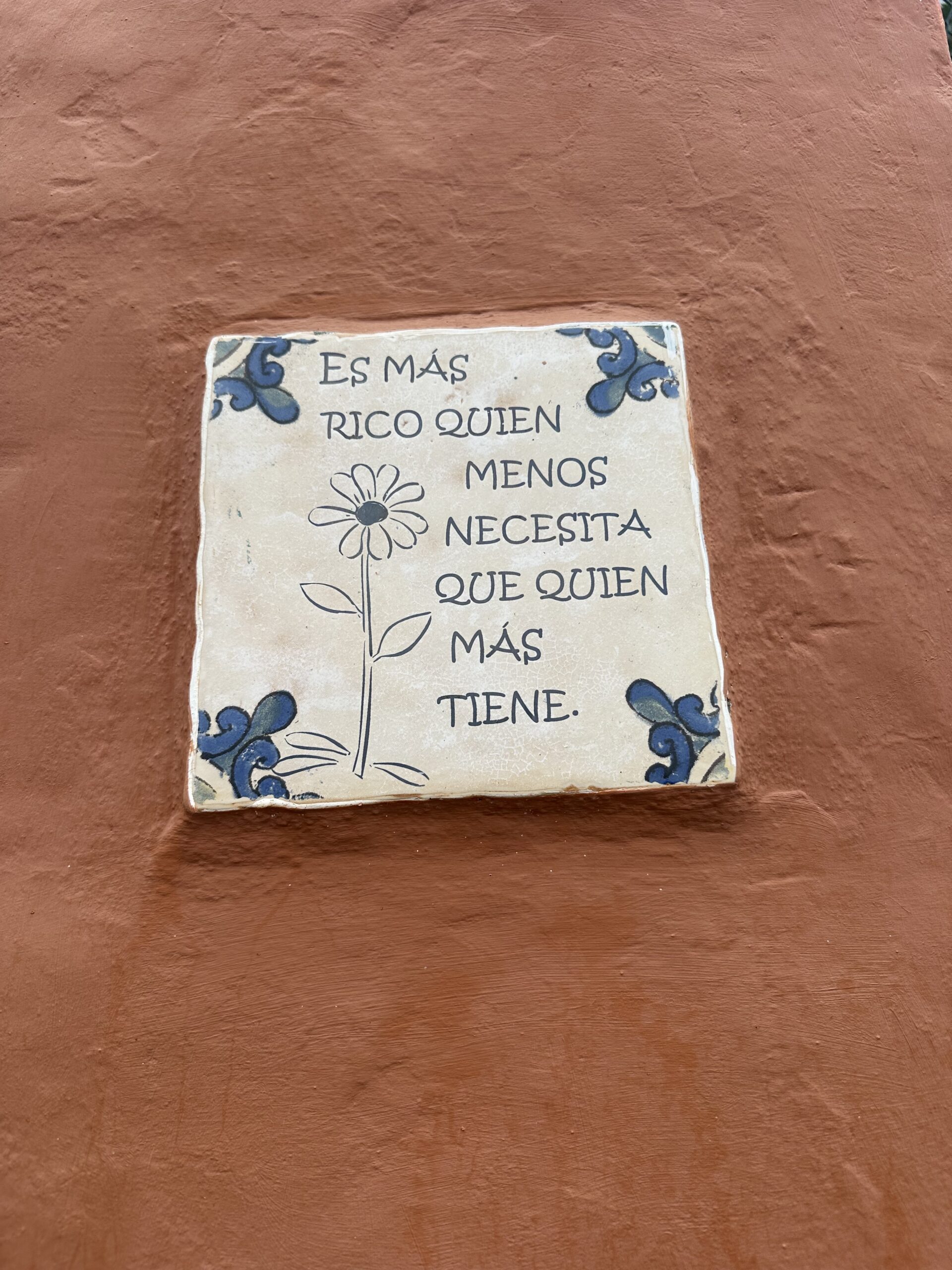
[Aggiungi qui i TUOI posti del cuore — dove ti siedi tu a contemplare, il tuo spot segreto.]
Reservoirs & mountain water
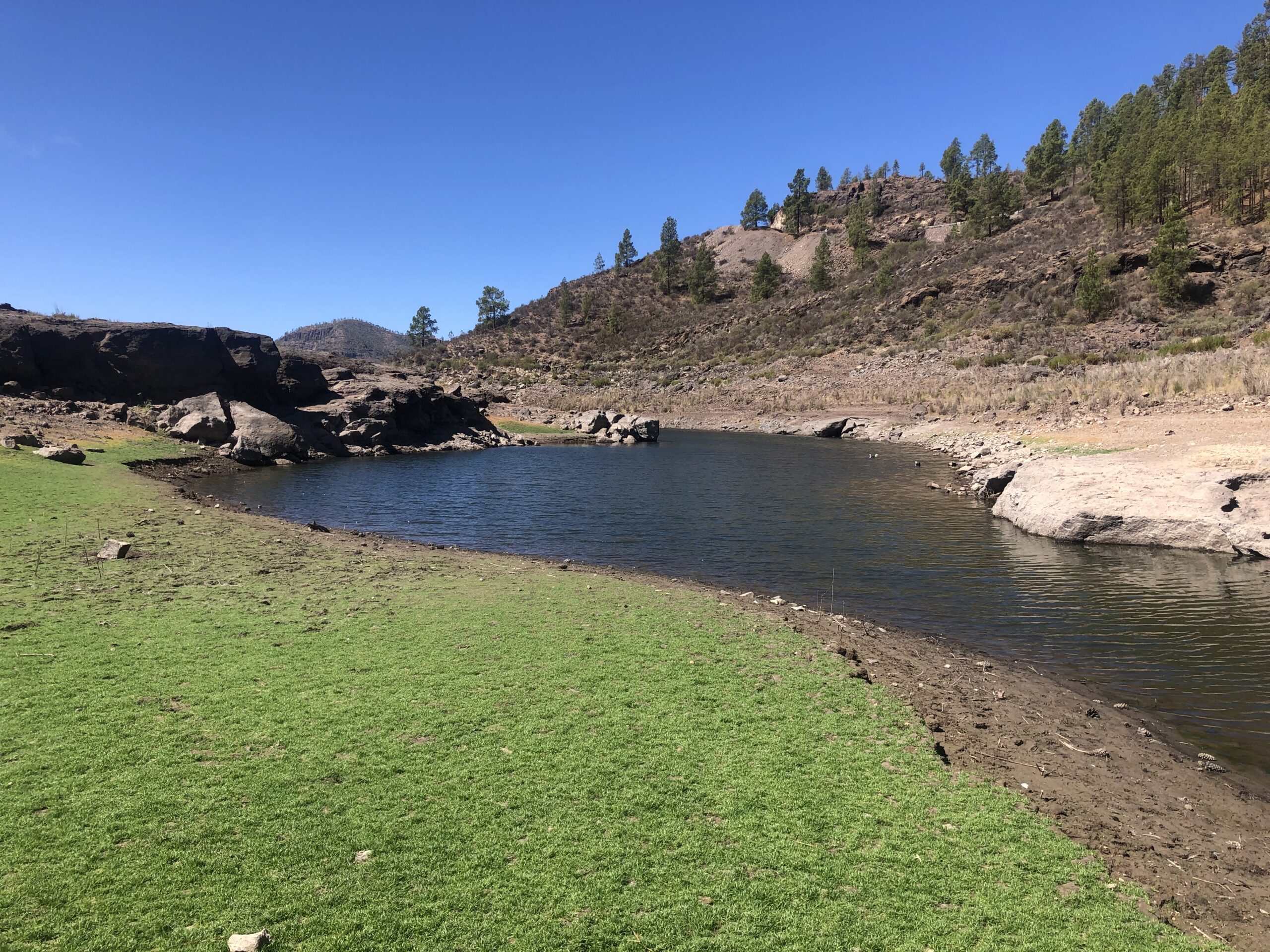
Gran Canaria has no natural lakes, but its mountain reservoirs (presas) are some of my favourite places to break a walk — ringed by pines and peaks, and made for a slow picnic. Let me tell you about the one I love most.
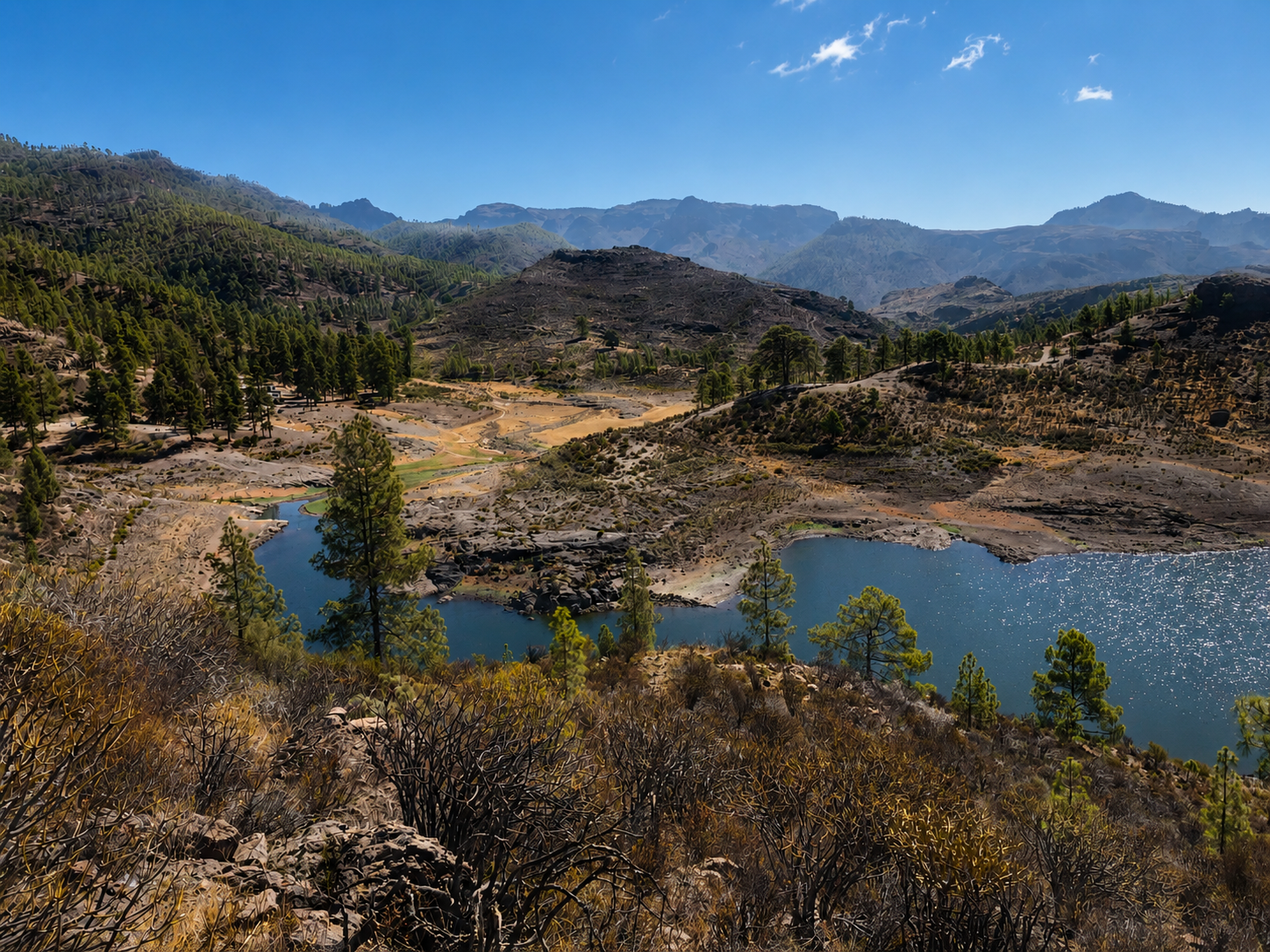
💧 Presa de las Niñas — my happy place
honestly one of the most peaceful spots on the whole island
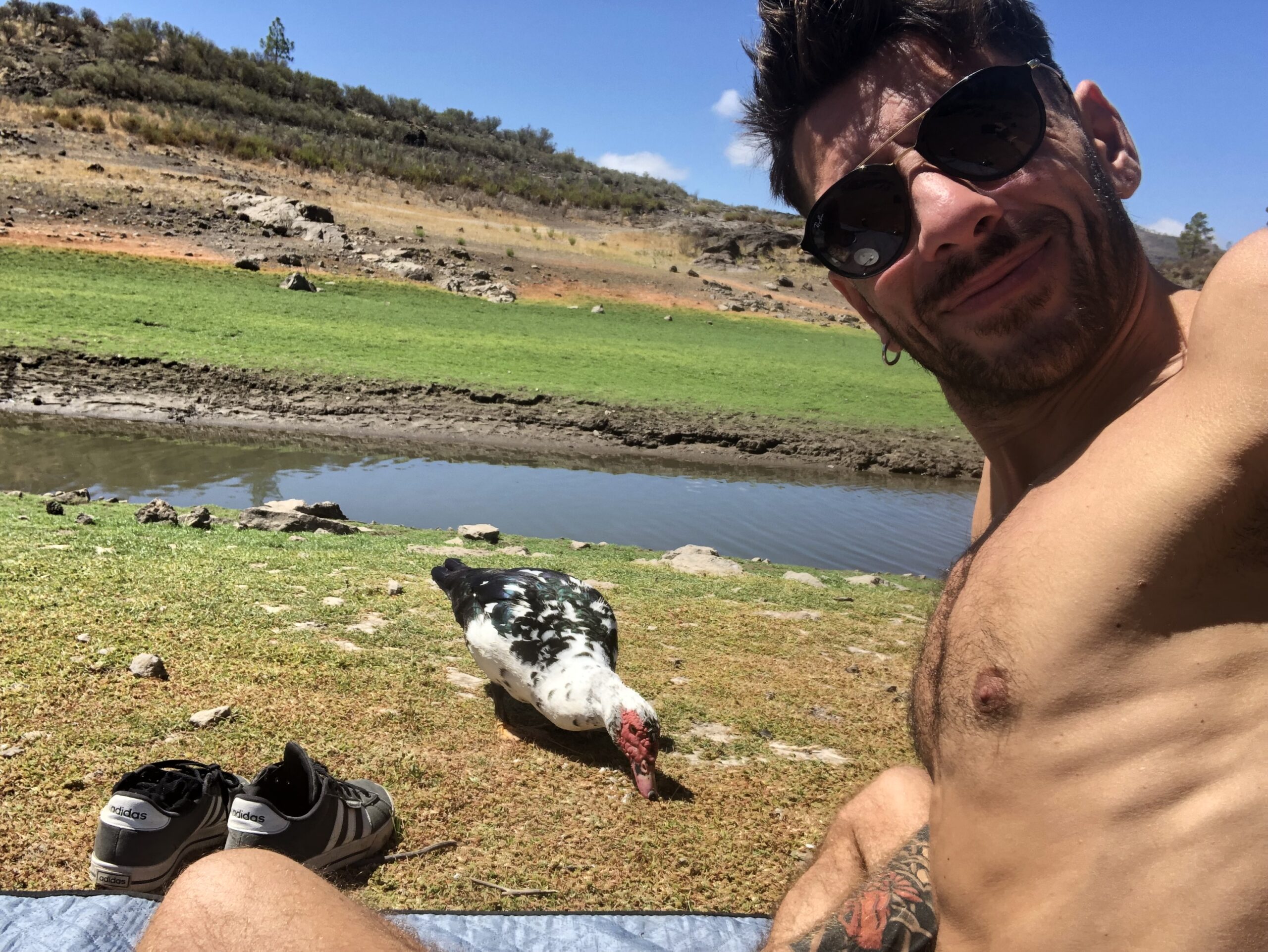
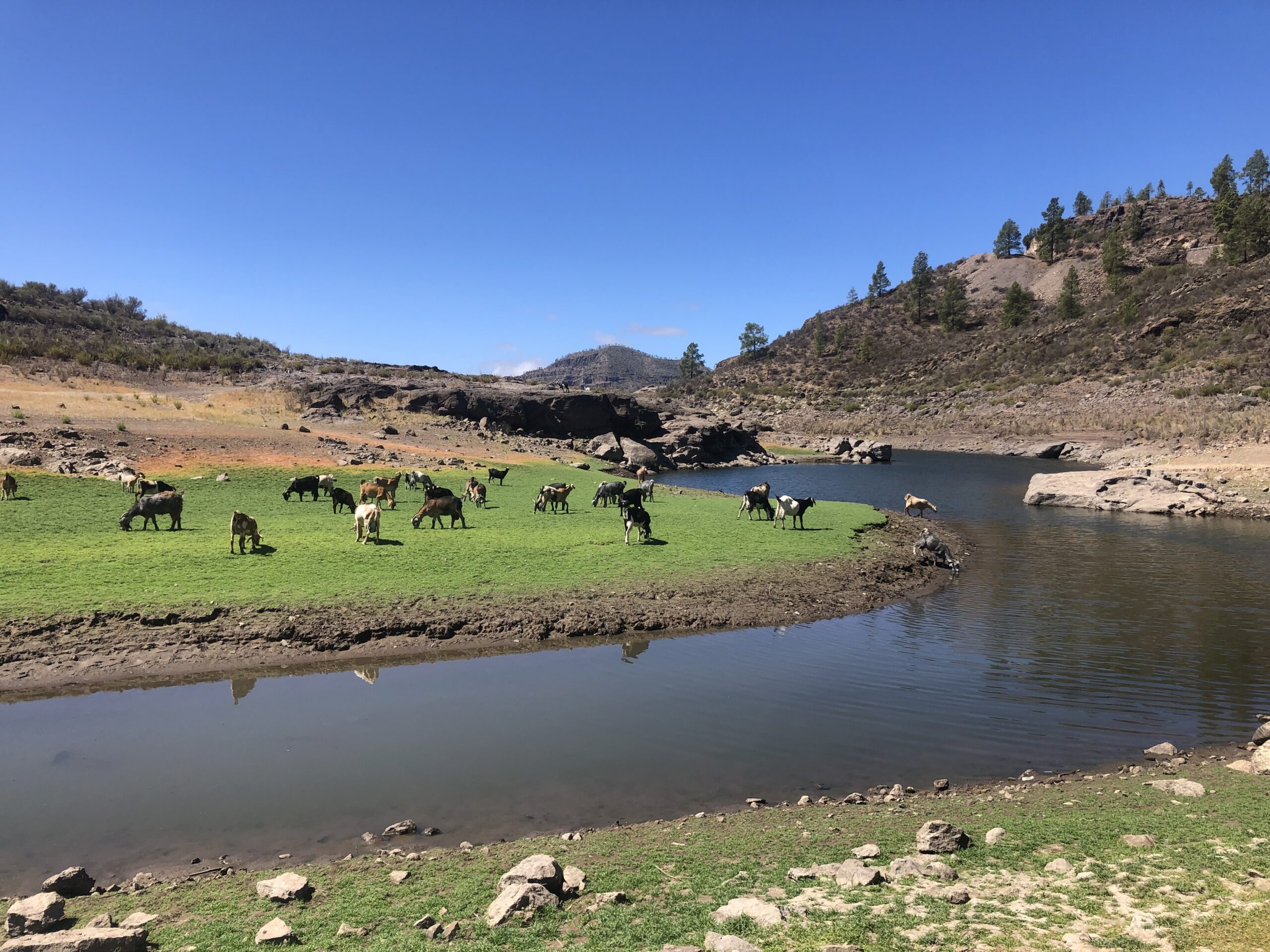
I’ll be straight with you: this is where I go when I just want to breathe. We came up for a picnic, and I ended up swimming in the reservoir itself — the water cool and calm, the kind that washes the whole week off you. What made it unforgettable wasn’t just the swim, though. All around us on the grass were these big grey geese, completely unbothered, and further off a scatter of goats grazing on the slopes. Just us, the water, the animals and the pines. One of those simple afternoons that stays with you.
It’s a Cabildo camping zone too (permit needed — see above), so you can stay the night by the water. When the reservoir is full you can paddle or kayak; the rest of the time it’s perfect for a lazy lakeside picnic after a cumbre walk.
And two more reservoirs worth the detour:
💧 Presa de Soria
The largest reservoir on the island, set deep in dramatic mountain scenery in the south-west — a quiet, scenic detour.
💧 Presa de Chira
Surrounded by spectacular peaks, a peaceful, less-visited spot great for combining with a cumbre walk.
Los Azulejos de Veneguera — the rainbow rock
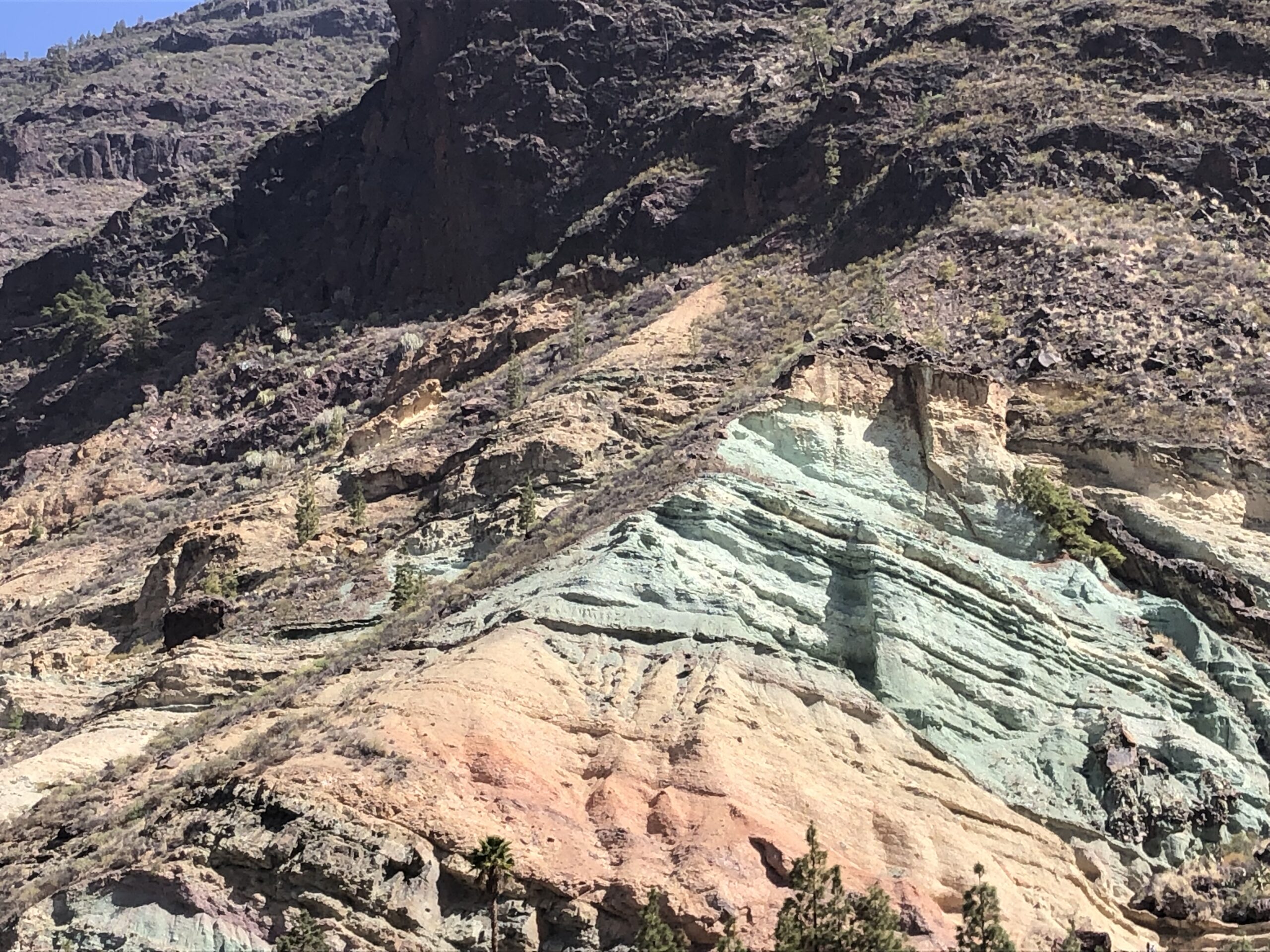
If you’re driving the GC-200 towards Mogán, don’t speed past this one. Los Azulejos (also called Fuente de los Azulejos) is a hillside of rock streaked in greens, turquoises and ochres — the colours come from minerals in the volcanic sediment, and on a sunny day they almost glow. It’s right by the road, so it’s an easy stop, but it’s one of those little geological wonders that makes you realise how strange and varied this island really is.
Barranco de las Vacas — the mini Antelope Canyon
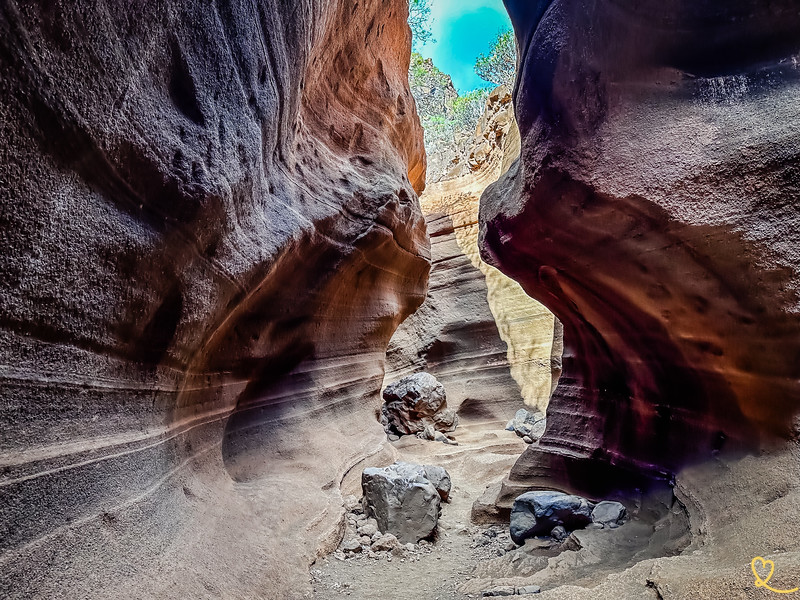
This one feels like a secret. Tucked away near Agüimes in the south-east, the Barranco de las Vacas hides a tiny slot canyon of wind- and water-carved volcanic tuff — smooth, wavy walls in warm honey tones that genuinely look like Arizona’s Antelope Canyon shrunk down to a Canarian scale. It’s only a few dozen metres long, but it’s one of the most photogenic, otherworldly little corners on the island. Proof, again, that Gran Canaria really is a continent in miniature.
The most spectacular viewpoints
If you’re driving the cumbre between walks, these miradores (viewpoints) are worth pulling over for — some of the best panoramas on the island:
📸 Central cumbre
- Roque Nublo & Pico de las Nieves
- Cruz de Tejeda
- Degollada de las Palomas
- Degollada Becerra
- Roque Bentayga
📸 The wild west
- Mirador del Balcón
- Andén Verde
- Mirador de Unamuno (Artenara)
- Roque Faneque
Many seasoned travellers rate the west (Tamadaba, Inagua, La Aldea, Güigüí) as the most spectacular and least touristy part of the island.
A UNESCO Biosphere Reserve
The whole island is a UNESCO Biosphere Reserve, and walking the interior you’ll see why. The forests are dominated by the endemic Canary pine, with rare pockets of ancient laurisilva (laurel cloud forest) surviving at Los Tilos de Moya. Look out for endemic plants like cardón canario, tabaiba, Canary broom and Canary sage. Birdwatchers can spot the Canary kestrel, the Canary raven, peregrine falcon and barn owl, while the Gran Canaria giant lizard suns itself on the rocks — most easily seen in the quieter western areas.
Trail distances, times and difficulty are indicative and gathered from public trail data and local knowledge — always check current conditions, signage and access permits before setting out, and never camp without the required Cabildo authorisation. Conditions in the mountains change fast; turn back if the weather closes in. Some links are affiliate links (GetYourGuide for guided experiences): booking through them costs you nothing extra and helps keep Coastal Canary Life free and independent.